
UK regulatory explainer
Casino Not on GamStop: Offshore Sites, UK Law and Self-Exclusion
 Available in GB
GamStop has carried more than 562,000 registered users since its April 2018 launch, yet it stops at the UK Gambling Commission's border. This guide explains what that means for British players who keep meeting the phrase "casino not on GamStop" online.
The short version
- GamStop is the United Kingdom's free national online self-exclusion scheme, run by The National Online Self-Exclusion Scheme Limited, and it only binds operators that hold a UK Gambling Commission licence.
- "Casino not on GamStop" is the affiliate shorthand for an operator licensed offshore (most often in Curacao or Anjouan) that therefore has no link to the GamStop database.
- UK players do not commit an offence by playing offshore, but the operator is unlawful for UK purposes under section 33 of the Gambling Act 2005 if it accepts British customers without a UKGC permit.
- Offshore players lose the GamStop link, UKGC dispute resolution, mandated affordability checks, guaranteed GBP support and Faster Payments, and pick up wider scam-pattern risk.
- Anyone who registered with GamStop because they wanted to stop should treat layered tools (GamStop plus Gamban plus bank blocks plus GamCare) as the recommended pathway, not an offshore workaround.
- Help is free, confidential and available 24 hours a day on the National Gambling Helpline, 0808 8020 133.
What GamStop is and where its block ends
GamStop is the United Kingdom's free national online multi-operator self-exclusion scheme. It was soft-launched in April 2018 by the Remote Gambling Association at the request of the Department for Culture, Media and Sport and the Gambling Commission, and in September 2019 legal ownership transferred to its own directors at The National Online Self-Exclusion Scheme Limited (NOSES). Integration with GamStop became a mandatory licence condition for every UK Gambling Commission online licensee in 2020 and was fully required by 31 March 2021. By the end of 2025 more than 562,000 people had registered, with 58,675 new sign-ups in the six months to 31 December 2025 alone, an average of 319 a day. The 5-year exclusion is now the most common option overall, accounting for roughly 47 percent of choices in 2025.
Mechanically, GamStop runs a real-time API integrated into every UKGC licensee's account-creation and login flow. When a player tries to register or log in, the operator's system queries the central database against name, date of birth, email and postcode. An active match blocks the account. New registrations propagate across the network within 24 hours. Self-exclusion options are 6 months, 1 year, 5 years and, since the end of 2024, 5 years with auto-renewal. In February 2026 GamStop also formally absorbed the older betting-shop self-exclusion programme, broadening its reach into physical premises.
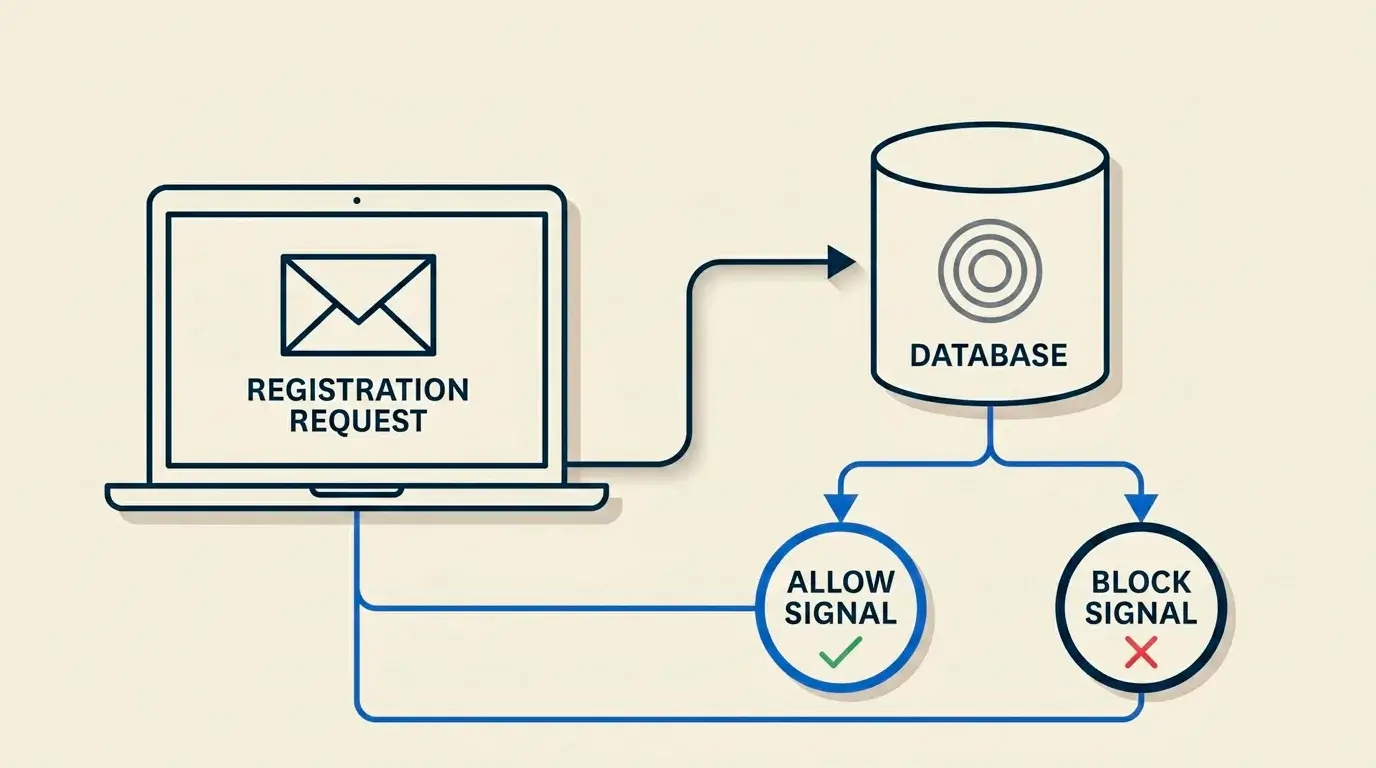
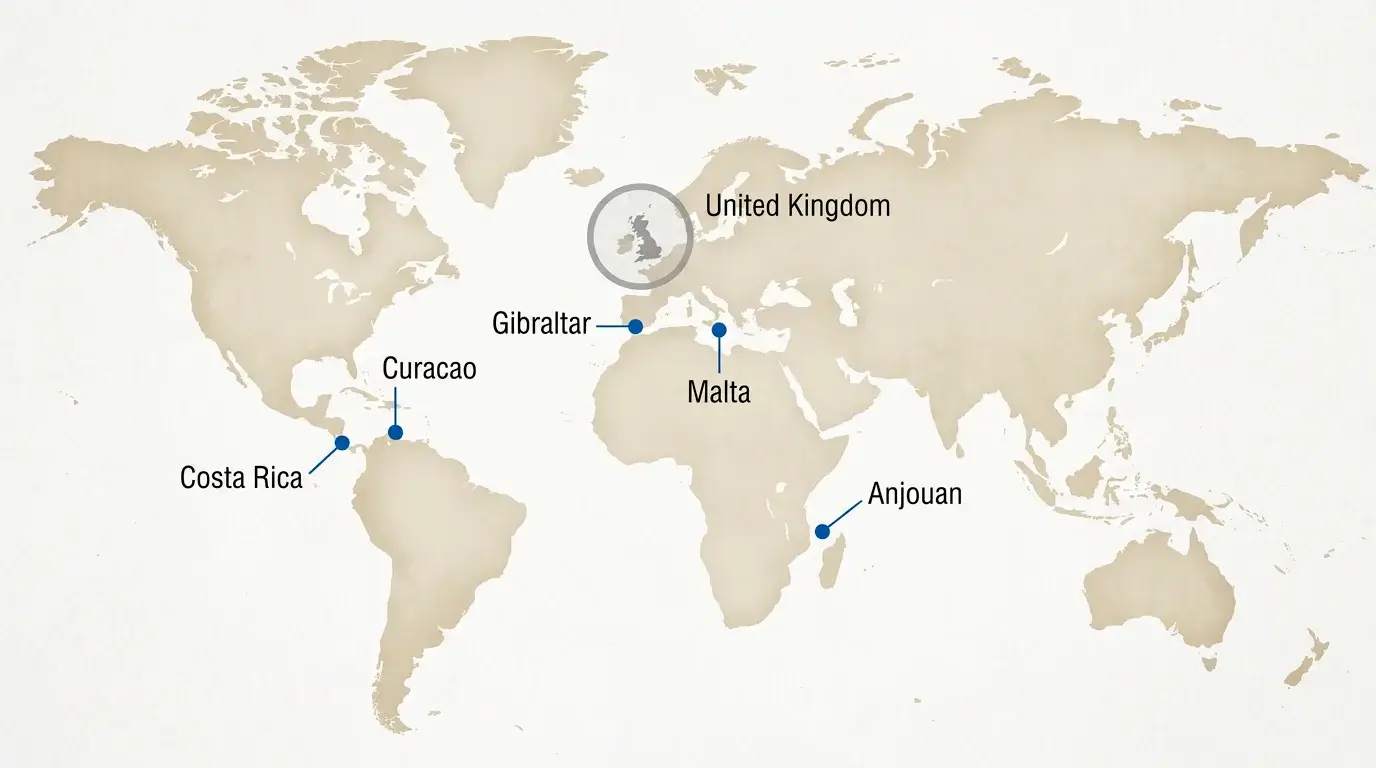
The structural limit follows directly from that scope. GamStop binds licensees of the UK Gambling Commission. An operator that holds only a Curacao, Anjouan, Malta, Gibraltar or Costa Rica permit is not connected to the database and has no obligation to query it. From the user's standpoint the GamStop block simply does not exist on that site. That gap is the entire reason the phrase "casino not on GamStop" entered the UK search vocabulary, and it sits at the heart of every page that follows. For a deeper look at the matching mechanism and its known weaknesses, read how GamStop self-exclusion works.
Why a category of casinos sits outside GamStop
The offshore non-GamStop segment is not a single product. It is what happens when a national self-exclusion scheme is layered onto a global digital market. Three forces sustain the category. The first is regulatory friction in the licensed UK market: statutory £5-per-spin online slot stake limits for players aged 25 and over (from 9 April 2025), £2 for those aged 18-24 (from 21 May 2025), tighter affordability checks at a reported £150 net-loss threshold from early 2025, a cap on wagering requirements and a ban on mixed-product bonuses landing in January 2026. The second force is tax pressure: Remote Gaming Duty rose from 21 percent to 40 percent of gross gaming yield from 1 April 2026, the largest single-step rise in UK gambling tax history.
The third force is harm-side rather than commercial: a measurable share of self-excluded players want to return to gambling before their exclusion period ends. The Gambling Commission and GamCare have repeatedly identified this as the highest-concern driver of offshore demand because it converts a protective tool into a problem the protective tool cannot fix. Search-volume data points the same way: GamStop sign-ups peaked around major UK betting events such as the 2025 Grand National, and offshore-casino searches climb in parallel. Industry trade bodies and analysts have argued that the 40 percent duty and tighter UK rules will accelerate the migration further; harm-prevention groups argue the opposite, that the rise in non-GamStop interest is exactly why layered self-exclusion is now essential.
None of those forces makes the offshore category a regulated alternative for British players. They explain why the category exists, not why a UK player should treat it as a safe substitute for a UKGC site. The rest of this guide separates those two questions deliberately.
The legal position for UK players and operators
UK gambling law applies on a point-of-consumption basis. The Gambling Act 2005, as amended by the Gambling (Licensing and Advertising) Act 2014, sets out the framework. The 2014 Act came into force on 1 November 2014 and extended the licensing requirement so that any operator providing gambling facilities to British consumers must hold a UKGC licence, regardless of where the operator itself is based. The previous "place of supply" loophole was closed.
The criminal offence sits squarely on the operator. Section 33 of the Gambling Act 2005 makes it an offence to provide facilities for gambling without a Gambling Commission licence, with a maximum penalty of up to 51 weeks of imprisonment and a level 5 fine. Section 36 extends section 33 to remote gambling where the facilities are used in Great Britain or the relevant equipment is in Great Britain, and the inserted subsection 36(3A) clarifies that the offence engages only where the operator "knows or should know" its facilities are used here. That subsection is the legal reason offshore sites geo-block UK traffic and write UK-exclusion language into their terms. Section 330 separately makes the advertising of unlawful gambling an offence, which is the basis on which the recent Stake/Everton and TGP Europe sponsorship warnings were issued.
The position in one paragraph
A British player does not commit a section 33 offence simply by registering or playing at an offshore casino. The offence applies to the operator. An operator that has no UKGC licence yet accepts UK customers is unlawful for UK purposes, even if it holds a Curacao or Anjouan permit. Player winnings remain free of UK income tax in any case, because gambling winnings are not treated as income.
Enforcement against unlicensed offshore activity has stepped up sharply. The Crime and Policing Bill, introduced to Parliament in February 2025, is expected to give the Commission further powers; the UKGC received an additional reported £26 million in government funding in 2026 to expand action against illegal sites; and the DCMS-led Illegal Gambling Taskforce published its terms of reference in May 2026, bringing payment providers, tech platforms and law enforcement around one table. For a sentence-by-sentence reading of the statute, see what UK law actually says about playing at a casino not on GamStop.
Offshore licence jurisdictions explained
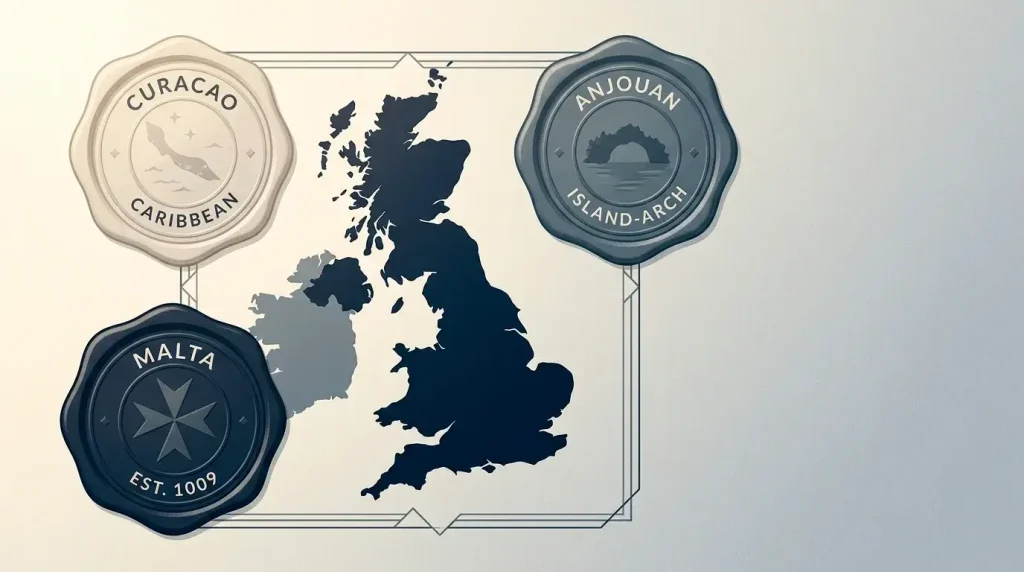
Almost every non-GamStop brand sits under a foreign licence. The four jurisdictions that dominate the segment behave very differently, and lumping them together (as most affiliate listicles do) is one of the more common errors that British readers carry into the niche.
Curacao under the new LOK regime
For 25 years Curacao operated under the 1993 National Ordinance on Offshore Games of Hazard, with four "master licence" holders issuing unlimited sub-licences. That model is now closed. On 17 December 2024 the Curacao parliament approved the new National Ordinance on Games of Chance (Landsverordening op de Kansspelen, the LOK), which came into force on 24 December 2024. The LOK abolishes sub-licensing, replaces the old Gaming Control Board with the Curacao Gaming Authority as the single licensing body, and introduces direct single-tier licences of one year duration with mandatory local presence, AML and KYC controls, responsible-gambling tooling and an independent complaints process. By late 2024 around 220 LOK licences had been granted, with several hundred more expected through 2025.
Anjouan and the UK restriction list
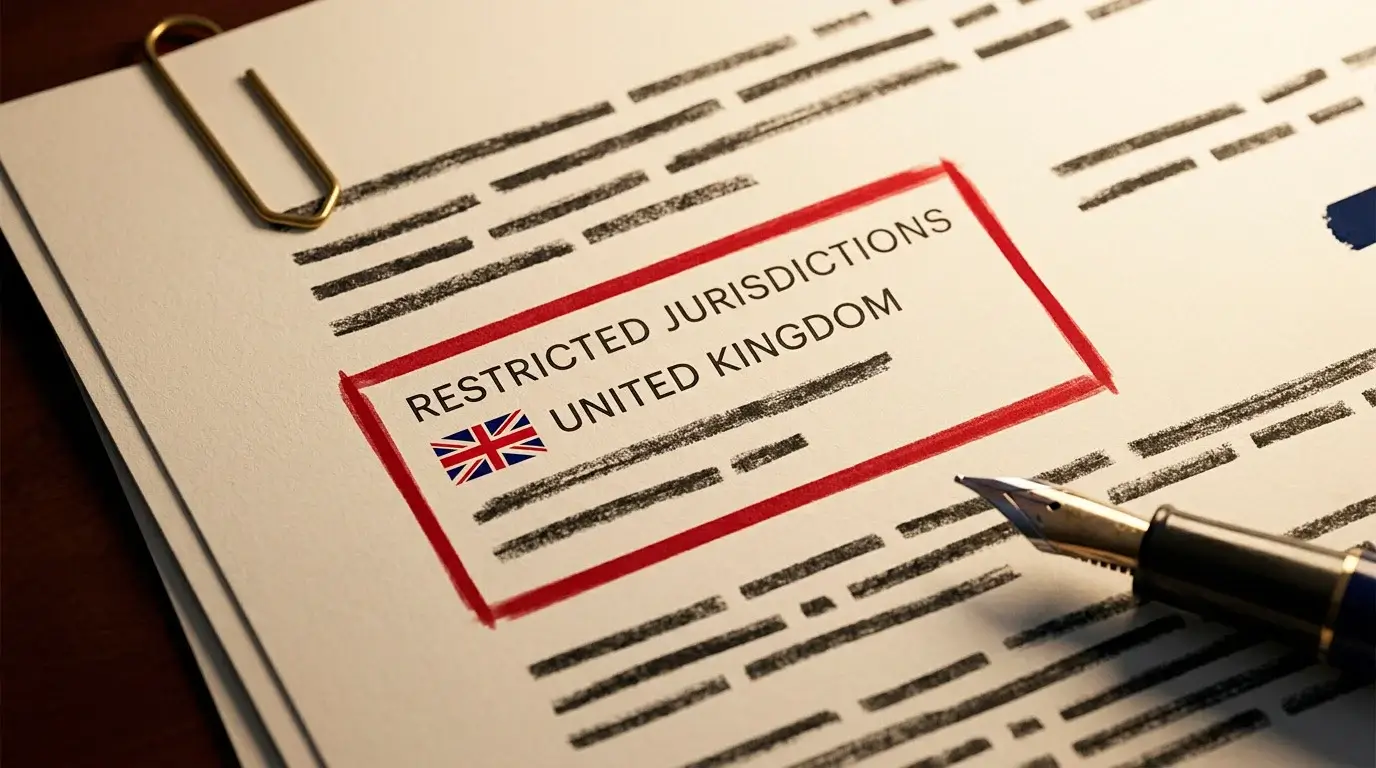
Anjouan, in the Union of the Comoros, operates under the Computer Gaming Licensing Act 007 of 2005 and is supervised by the Anjouan Betting and Gaming Board, the Anjouan Offshore Finance Authority and the licence administrator. A single B2C licence covers casino, sports betting, poker and interactive games. The critical point for British readers is that Anjouan's own licence terms explicitly exclude a defined list of restricted jurisdictions which includes the United Kingdom alongside the United States, France, Germany, Spain, Australia and the Netherlands. Operators are required to geo-block traffic from those countries. An Anjouan-only licensee that knowingly accepts UK customers is therefore in breach of its own licence terms as well as section 33 of the Gambling Act 2005.
MGA, Gibraltar, Costa Rica and Kahnawake
The Malta Gaming Authority is the most reputable of the alternatives commonly cited, but an MGA-only permit does not authorise service to UK residents either. UK-facing brands historically licensed in Gibraltar typically hold parallel UKGC permits. Costa Rica issues no specific gambling licence at all: operators are registered as general data-processing companies, which is why the country sits at the bottom of any regulatory-weight ranking. Kahnawake (Quebec, Canada) is a long-established offshore jurisdiction that appears occasionally. None of these licences cover UK service in their own right. For the jurisdiction-by-jurisdiction breakdown, see Curacao, Anjouan and Malta licences explained for UK players.
How the offshore operator landscape is structured
This site does not publish a named ranking of casinos not on GamStop. The reason is editorial, not promotional: our operator-verification standard requires a current licence number, a consistently attributed operating company across independent reviews, a documented payments-and-KYC record and clear evidence that the operator authorises UK service. At the time of writing, fewer than five of the brands routinely surfaced for "casino not on GamStop" queries passed that bar, which is below the threshold this site uses to publish a comparison table. A placeholder list with invented or unverified names would actively mislead readers, so what follows is a category map instead.
The shape of the segment, in plain terms
- Curacao LOK licensees (large majority)
- Brands operating under the new Curacao framework, usually launched between 2018 and 2024 and built around large slot catalogues, live casino integrations and welcome bonuses in the 100 percent to 200 percent range. Strongest enforcement track record is yet to emerge because the LOK regime has been in force only since late December 2024.
- Anjouan AOFA licensees (rapidly growing)
- Cheaper to obtain and faster to issue than Curacao, with a single licence covering several product lines. Often crypto-leaning, often newer. The framework explicitly bars UK service; any UK-facing Anjouan-only brand is breaching its own permit.
- MGA-only or Gibraltar-only brands (small minority)
- Higher regulatory weight, but neither permit authorises UK service on its own. Most reputable UK-facing brands under these regulators also hold a parallel UKGC licence and therefore appear inside GamStop rather than outside it.
- Unlicensed or thinly licensed sites
- A measurable subset of "non-GamStop" sites carry no verifiable licence at all, or advertise an "international licence" without a regulator name or number. Trustpilot and AskGamblers complaint pages repeatedly document frozen accounts, indefinite KYC stalls and lookalike-domain phishing in this group.
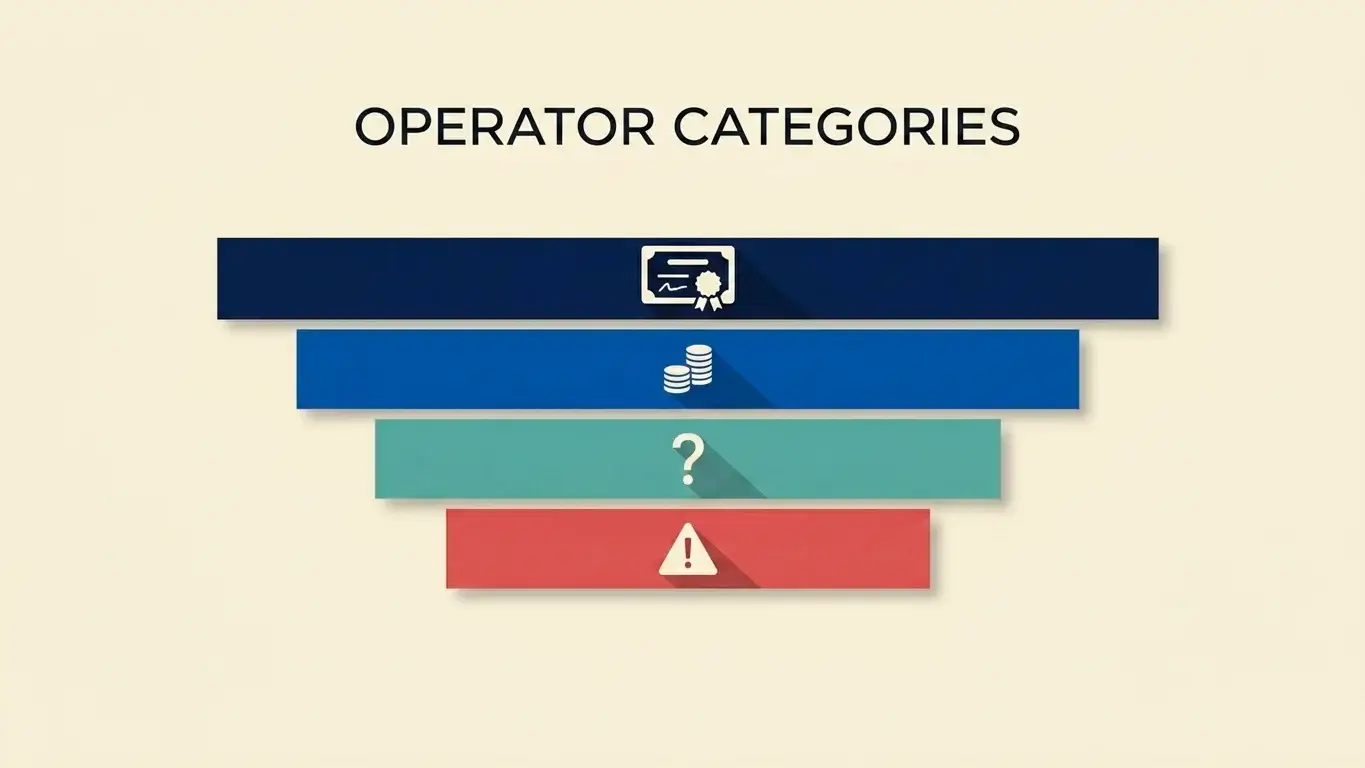
The practical reading of this picture is uncomfortable. The largest two categories sit under licences that do not authorise UK service; the most reputable category overlaps mostly with brands that are already in GamStop; and the residual category is where the worst player-protection outcomes are documented. That is the structural reason this site treats a named ranking as a misleading format rather than a missing feature.
Payments, currency and KYC realities offshore
Payment and verification mechanics are where the daily friction with offshore casinos lives. UKGC sites default to debit cards (credit-card gambling was banned in April 2020), accept PayPal, Apple Pay, Google Pay, Trustly, Skrill and Neteller, work in GBP and clear through Faster Payments. The offshore segment routinely defaults to EUR or USD, charges conversion fees on deposit and withdrawal, leans more heavily on Skrill, Neteller, Trustly, lesser-known wallets and cryptocurrency, and only patchily supports PayPal. Several UK debit-card issuers and PayPal itself block transactions identified as unlicensed gambling, so the payment rail is often the first place a UK player runs into a wall.
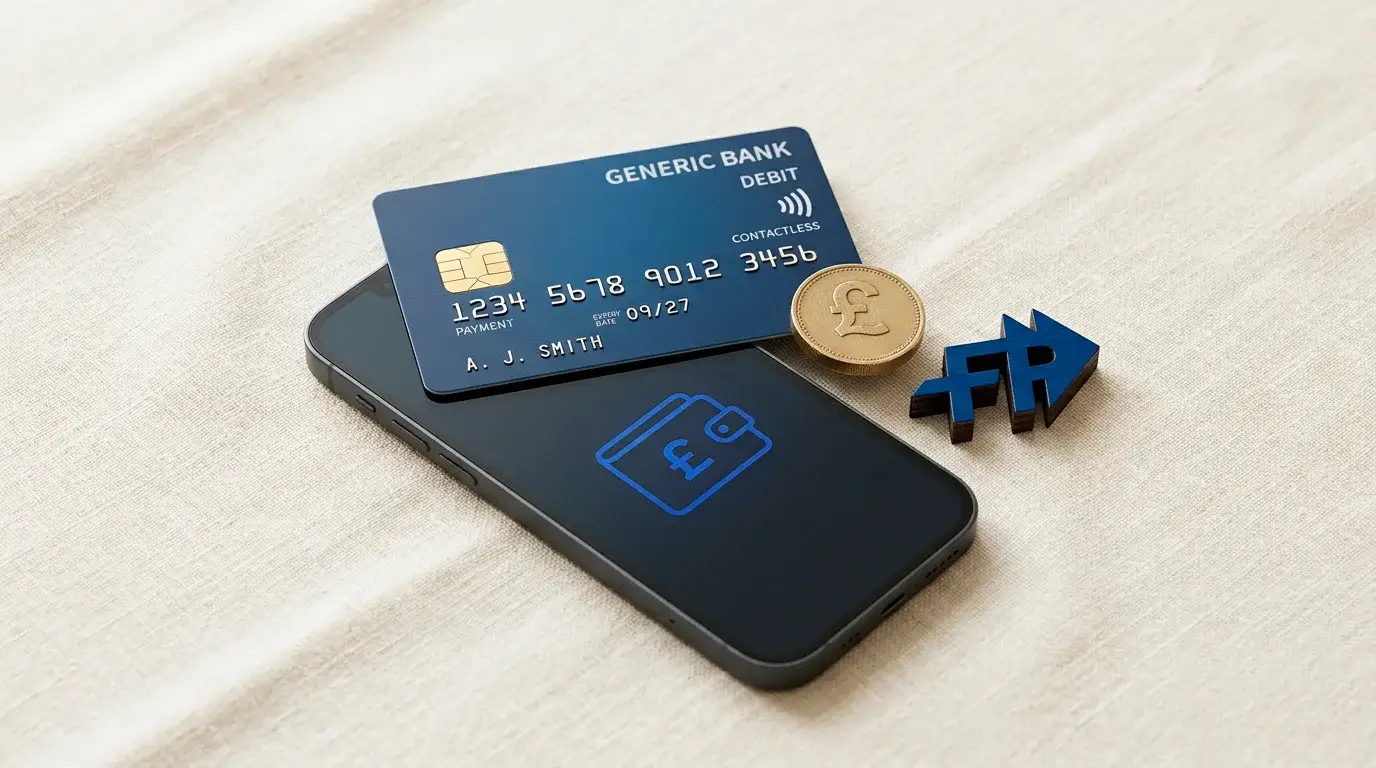
"No KYC" is the slogan that wins clicks but rarely survives contact with reality. In practice "no KYC" usually applies only below a withdrawal threshold (commonly somewhere between £2,000 and £5,000), and large wins still trigger document requests, sometimes for the first time only after the deposit has already been taken. That timing is precisely what creates the well-documented stalling pattern. The deposit clears in seconds; the withdrawal request triggers a KYC chain that the player did not anticipate; cash sits in limbo while documents are reviewed, then re-reviewed, then escalated. None of that is illegal under the operator's foreign licence, but it leaves a UK player with no UKGC dispute-resolution path. For the full payments breakdown, see payment methods and verification at casinos outside GamStop.
The risks players carry and how to weigh them
The honest balance sheet of a non-GamStop site, expressed without affiliate framing, looks like this. On the perceived-benefit side: bigger advertised bonuses, fewer affordability prompts, more crypto options, more product features (Bonus Buy, autoplay, "crash" mechanics) than UKGC sites currently allow. On the risk side: the GamStop link is gone, which matters most to anyone who registered because they wanted to stop; the UKGC dispute pathway through eCOGRA and IBAS does not apply; affordability prompts do not exist; GBP and Faster Payments are not guaranteed; the legal complaint route runs through a foreign regulator with a different procedural culture.
Reasonable due diligence if you proceed
- Verify the licence number on the regulator's own register (the Curacao Gaming Authority, the Anjouan board, the MGA), not on the casino's own footer.
- Search AskGamblers and Casino.guru complaint threads for the operator's brand and parent company.
- Confirm GBP support, deposit and withdrawal limits and the bonus terms before depositing a penny.
- Make a minimal test deposit, complete a small withdrawal, and only assess bonuses after the test cashout settles.
Red flags that justify walking away
- An "international licence" claim with no number and no named regulator.
- Withdrawal stalling or repeat KYC requests after a winning session.
- Unilateral terms changes between the moment you deposit and the moment you withdraw.
- Pressure to deposit through obscure crypto wallets or wire services that cannot be charged back.
None of that turns offshore play into a regulated equivalent of a UKGC site. The full risk taxonomy, including the recurring scam patterns drawn from complaint data, is set out in spotting unsafe offshore casinos: a risk and due-diligence guide.
Legitimate paths for anyone already self-excluded
If you registered with GamStop because you wanted to stop, the harm-prevention answer is not an offshore workaround. It is a layered exclusion that closes the gaps GamStop alone leaves. The Gambling Commission's own data puts solo GamStop effectiveness at roughly 43 percent of registrants successfully maintaining exclusion; the figure rises sharply when GamStop is paired with blocking software and bank-level transaction blocks. The integrated TalkBanStop programme run by GamCare brings GamStop, Gamban and structured support into one pathway and is free at point of use.
The practical toolkit for any UK player wanting to stay excluded is simple to assemble. GamStop covers UKGC-licensed sites; Gamban (free through TalkBanStop) blocks more than 40,000 gambling sites and apps at device level and reports 71 percent of users gambling-free at 12 months; BetBlocker is a free alternative covering more than 90,000 sites across iOS, Android and browsers; and UK retail banks (Lloyds, Monzo, HSBC, Starling and Barclays among them) all offer in-app gambling-transaction blocks with a 48-hour cooling-off period before any reversal. The deliberate removal-of-GamStop process, including the mandatory 24-hour cooling-off period, is covered in detail in leaving GamStop the proper way and keeping your self-exclusion intact.
Nine questions · about two minutes · nothing is sent anywhere
Where is your gambling right now?
An honest look at the last 12 months. Answer for how things have actually been, not how you'd like them to be — the result is only useful if the answers are.
No signs 1–2
Low 3–7
Moderate 8–27
High
Free, confidential help in the UK
- National Gambling Helpline — 0808 8020 133. Free, 24/7, by phone, live chat or WhatsApp.
- GamCare — gamcare.org.uk. Advice, counselling and peer support groups.
- GamStop — gamstop.co.uk. Blocks your access to every UK-licensed gambling site for 6 months, 1 year or 5 years.
- Gamban — blocking software for your phone and computer, often free through GamCare.
- GamFin — help with gambling-related debt, separate from the gambling itself.
This is a self-check, not a diagnosis. It follows the structure used by clinical screening questionnaires, but only a trained professional can assess you properly. If you're in crisis, call the helpline above or 999.
The 2025-26 reforms reshaping the picture
This has been the most concentrated period of UK gambling reform in twenty years, and every piece of it changes how the non-GamStop niche behaves. The April 2023 White Paper "High Stakes: Gambling Reform for the Digital Age" set the direction; the legislative output has arrived in steady waves since. Online slot stake caps went live in 2025; the statutory gambling levy on operators came into force on 6 April 2025 and replaced the old voluntary funding model; the mixed-product bonus ban arrived in January 2026; and the 40 percent Remote Gaming Duty on online casino, slots and bingo took effect for accounting periods beginning on or after 1 April 2026.
The signal underneath the changes
Every reform tightens the licensed UK market and raises the commercial pressure on operators. Industry bodies have warned that some demand will leak offshore; harm-prevention groups argue that the leakage is itself the strongest argument for layered self-exclusion. Both groups can be right at the same time. The Commission has answered the leakage with sharply increased enforcement funding and a new cross-government taskforce launched in 2026.
The information value for a British player is straightforward. The licensed UK market in 2026 is more protective and less generous on bonuses than it was in 2023, which is exactly the dynamic that drives the offshore search volume. The enforcement environment is also tighter than at any previous point, which means players who proceed offshore now do so against a backdrop of cease-and-desist notices, payment-flow disruption and search-engine deindexing of the worst sites. The companion regulation and licensing overview walks through the framework that ties those moving parts together.
A practical reading for UK players
This guide deliberately refuses to be an affiliate listicle, and that refusal is the practical reading. The honest summary is short. GamStop is a UKGC-only scheme, so any casino licensed outside the Commission's perimeter sits outside its block by design rather than by trick. UK law puts the offence on the operator, so the player is not committing a crime by registering offshore, but the operator that accepts a British customer without a UKGC permit is unlawful for UK purposes regardless of which Caribbean or Indian Ocean licence sits in its footer.
The protections that come with a UKGC site (the GamStop link itself, mandated affordability checks, eCOGRA and IBAS dispute resolution, guaranteed GBP and Faster Payments) do not travel with a Curacao or Anjouan permit. Anyone using a non-GamStop site does so in a fundamentally different consumer-protection environment. For a self-excluded player the most important sentence in this guide is that the protection you signed up for cannot be replaced by an offshore login screen, and the people best placed to help you keep it are at the National Gambling Helpline, free and confidential, 24 hours a day.
Common questions answered
Is it illegal for a UK player to use a casino not on GamStop?
No. Section 33 of the Gambling Act 2005 creates an offence on the operator that provides gambling facilities without a UK Gambling Commission licence. It is not an offence committed by the player simply by registering or playing. The operator, however, is unlawful for UK purposes if it accepts British customers without a UKGC permit, even when it holds a Curacao, Anjouan or Malta licence. See the legal status page for a sentence-by-sentence reading.
Can my GamStop self-exclusion be lifted early?
No. GamStop cannot be lifted before the chosen period ends. After the period expires the block is not removed automatically. The registrant must call GamStop on 0800 138 6518 between 10:00 and 20:00, verify identity, then wait through a mandatory 24-hour cooling-off period before access is restored. If no removal request is made, the exclusion continues. The deliberate removal pathway walks through every step.
Why does GamStop not block offshore casinos?
GamStop is a real-time database integrated into every UK Gambling Commission licensee. It only binds operators that hold a UKGC remote operating licence. A casino licensed only in Curacao, Anjouan, Malta or another offshore jurisdiction has no obligation to query the GamStop database, so the block does not exist on those sites. Read more on how the self-exclusion mechanism works.
Are winnings from offshore casinos taxable in the UK?
Gambling winnings are not taxable income for players in the United Kingdom across betting, casino and bingo, regardless of where the operator is licensed. Tax sits on operators through duties such as Remote Gaming Duty, not on punters. The legality of the operator is a separate question from the player's tax position.
Does an offshore licence make a casino safe for UK players?
A Curacao or Anjouan licence is not the same as a UKGC permit. None of the common offshore licences authorise service to UK residents, and Anjouan's own licence terms explicitly exclude the United Kingdom from the list of permitted jurisdictions. Players also lose UKGC dispute resolution, mandated affordability checks, the GamStop link and a guaranteed GBP currency framework. The jurisdiction breakdown goes deeper.
What does the rise in Remote Gaming Duty mean for the offshore market?
Remote Gaming Duty rose from 21 percent to 40 percent of gross gaming yield from 1 April 2026, the steepest single-step rise in UK gambling tax history. Industry analysts have repeatedly warned that pressure on licensed operators may push more demand toward unlicensed offshore sites, and the Gambling Commission has received additional government funding to expand enforcement against illegal websites.
Where can a UK player get help for problem gambling?
The National Gambling Helpline, operated by GamCare, is free, confidential and available 24 hours a day on 0808 8020 133, with live chat and WhatsApp options. GambleAware and the National Gambling Support Network coordinate further treatment routes. Gamblers Anonymous UK runs peer support on 0330 094 0322.
Related posts
What UK Law Actually Says About Playing at a Casino Not on GamStop
Curacao, Anjouan and Malta Licences Explained for UK Players