
Curacao, Anjouan and Malta Licences Explained for UK Players
 Available in GB
A common reassurance offered by non-GamStop casinos and the affiliate sites that rank them is that the operator holds a “reputable offshore licence” in Curacao, Anjouan or Malta. The reassurance is usually meant to imply that the licence makes British play safe and lawful. It does neither, and the reasons matter. This page walks through the licence jurisdictions most often cited by non-GamStop operators, explains what each authorises and what it does not, and sets out why none of them is a substitute for a UK Gambling Commission licence when the customer is in Great Britain.
The full picture is in our guide to casinos not on GamStop.
Curacao Is the Largest Source of Non-GamStop Licences and Has Just Been Reformed
Curacao has for a quarter of a century been the largest source jurisdiction in the offshore online casino sector, and a large share of the operators marketed as “casino not on GamStop” sites hold a Curacao permit. From 1993 until late 2024 the island ran a master-licence model under the National Ordinance on Offshore Games of Hazard, generally abbreviated to NOOGH. Four master licence holders, including Antillephone N.V., Curacao Interactive Licensing N.V. and Gaming Curacao, were entitled to issue an effectively unlimited number of sub-licences. The result was a cheap, fast and lightly supervised licensing channel that produced thousands of operators with minimal central oversight.
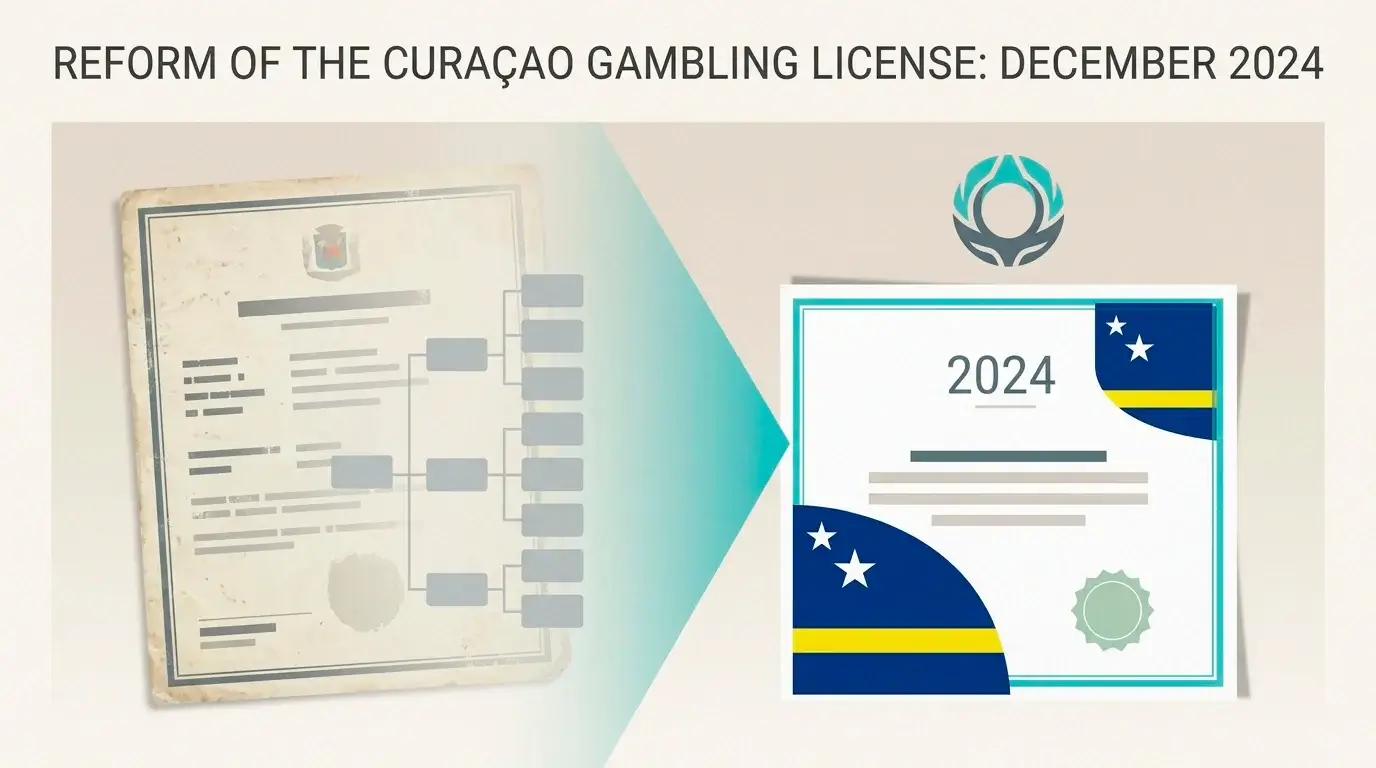
The Curacao Parliament approved a new framework on 17 December 2024. The Landsverordening op de Kansspelen, abbreviated to LOK and translated as the National Ordinance on Games of Chance, entered into force on 24 December 2024. It abolishes the master and sub-licence model, replaces it with direct single-tier licences issued by a single regulator, and creates the Curacao Gaming Authority as the new licensing body, evolved from the former Gaming Control Board. Licences are issued in two classes, B2C for operators and B2B for suppliers, run for one year with renewal, and carry mandatory requirements for local presence, anti-money-laundering controls, know-your-customer procedures, responsible-gambling tooling and independent complaint handling. By late 2024 the new authority had granted around 220 LOK licences, with around 600 expected by the end of the first quarter of 2025.
The LOK reform is a meaningful upgrade by the standards of the old NOOGH regime, but it does not change what a Curacao licence actually authorises. The licence permits an operator to provide gambling under Curacao law to customers in jurisdictions that lawfully accept Curacao-licensed operators. The United Kingdom is not such a jurisdiction. A Curacao licensee accepting British customers without a UKGC operating licence is unlicensed for UK purposes the moment it does so, regardless of how compliant it is in its home jurisdiction. The legal mechanics behind that conclusion are set out in the UK legal status page. The reform also has no effect on GamStop integration: a Curacao licensee has no legal obligation to query the GamStop database, because the obligation flows from the UKGC licence condition described in how GamStop self-exclusion works.
Anjouan Explicitly Excludes the United Kingdom From Its Licence Terms
Anjouan, a small island within the Union of the Comoros in the western Indian Ocean, has become the second-most-visible offshore licence in the non-GamStop segment, largely as a response to operators leaving Curacao when the LOK reform raised costs and compliance expectations. The Anjouan online gambling regime sits on the Computer Gaming Licensing Act 007 of 2005, with the Money Laundering Prevention Act 008 of 2005 supplying the AML framework. Supervision is split between the Anjouan Betting and Gaming Board, sometimes referred to as the Anjouan Gaming Authority, and the Anjouan Offshore Finance Authority, with Anjouan Licensing Services Inc. administering applications.
A typical Anjouan B2C licence costs around 17,000 euros to obtain and is issued in roughly two to eight weeks, depending on the completeness of the application. The licence covers casino, sports betting, poker, bingo and interactive games under a single authorisation. Taxation under the regime is zero per cent on Gross Gambling Yield and zero per cent on corporate income, conditional on operating through an international business company structure. By offshore standards the regime is unusually fast and unusually permissive.
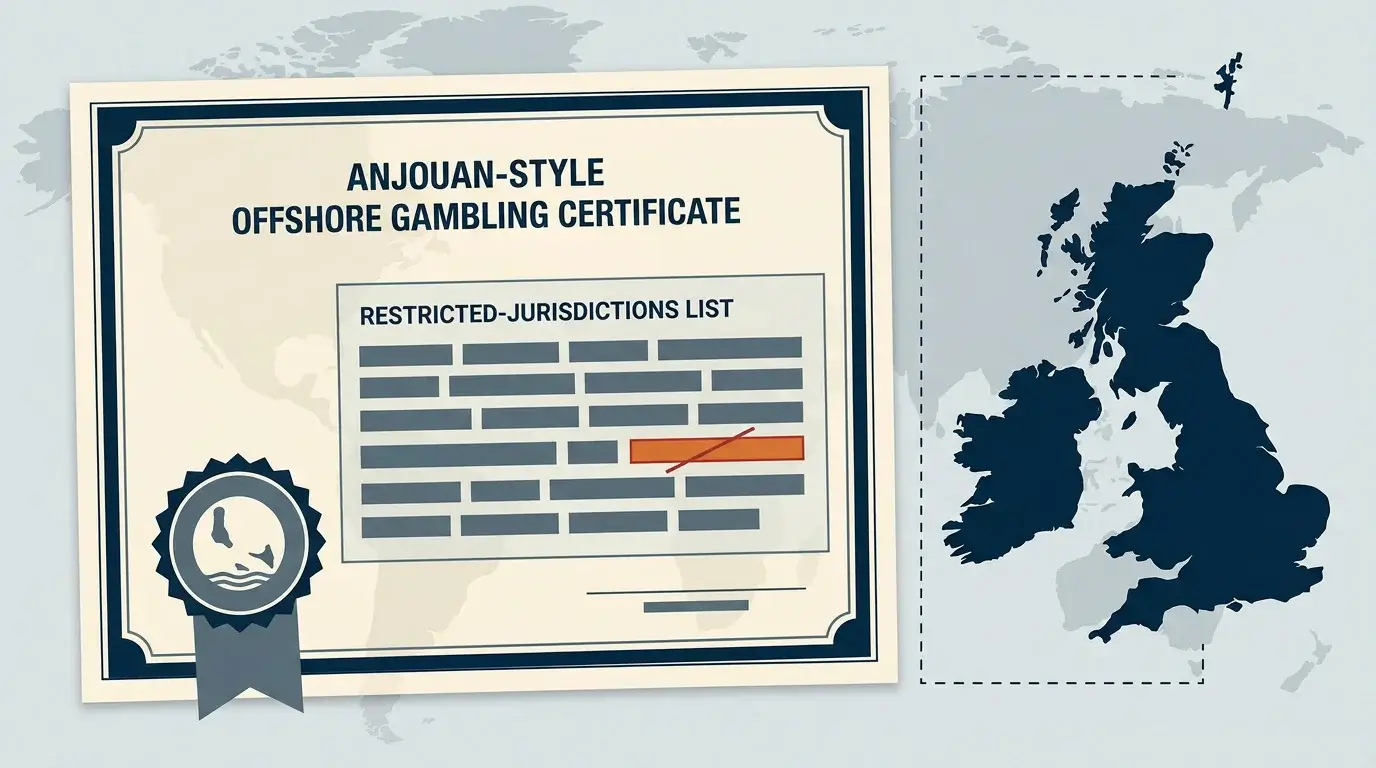
The decisive fact for British players is the licence’s own list of restricted jurisdictions. Anjouan licence terms explicitly require operators to geo-block customers in the United States, the United Kingdom, France, Germany, Spain, Australia, the Netherlands and a list of other jurisdictions and FATF-blacklisted states. The framework documentation is unambiguous: the United Kingdom operates a robust licensing scheme and does not recognise Anjouan licences for British players, and operators are required to implement geo-IP blocking and VPN detection to restrict access from these jurisdictions. An Anjouan-only licensee that accepts a British customer is therefore in breach of its own home licence in addition to operating unlicensed for UK purposes under section 33 of the Gambling Act 2005. This is the single most important point in this entire page: an Anjouan licence is not a credible signal that British play is authorised, because the licence itself says the opposite.
The Malta Gaming Authority Permit Is Reputable but Does Not Cover the UK Either
The Malta Gaming Authority is the most rigorous of the offshore-licence jurisdictions commonly cited in the non-GamStop segment. The MGA has been issuing licences since 2001, is an EU regulator, and applies tighter scrutiny on operator solvency, technical standards and player-protection requirements than either Curacao or Anjouan. Some of the more reputable offshore operators in the broader European market hold MGA permits, and an MGA licence is generally regarded as a higher trust signal than the offshore-island alternatives.
The MGA does not, however, authorise service to UK residents. Since 2014, any operator targeting British customers has needed a UKGC licence in addition to whatever home-jurisdiction permit it holds. Most large MGA-licensed operators that previously served the British market also obtained UKGC licences and continue to operate dual-licensed; those operators are integrated with GamStop by virtue of the UKGC condition and so do not appear in the non-GamStop segment. MGA-only operators that nonetheless accept British customers are in the same legal position as Curacao-only or Anjouan-only operators: unlicensed for UK purposes under section 33, subject to enforcement, and outside the GamStop perimeter. The MGA is reputable, but it is not a UKGC.
The same broader logic applies to Gibraltar, the Isle of Man, the Alderney Gambling Control Commission and other Tier 1 or upper-tier offshore regulators. Operators licensed there for the British market hold a separate UKGC licence; those that do not are unlicensed for UK purposes when they accept a British customer, regardless of the trust signal their home regulator otherwise carries. The wider regulatory context for that conclusion is in the regulation and licensing overview.
Costa Rica, Kahnawake and the No-Licence Tail
Costa Rica is unusual in the offshore landscape because it does not issue a specific gambling licence. Operators register as general data-processing companies, pay the regular corporate fees, and are not subject to a gambling-specific supervisory framework. Costa Rica is therefore best read as a permissive incorporation jurisdiction rather than as a regulator. The trust value of a Costa Rica corporate filing for a casino marketed to British players is correspondingly low.
Kahnawake, a Mohawk territory in Quebec, Canada, has operated a gambling regulatory authority since 1996. The Kahnawake Gaming Commission is one of the oldest dedicated online gambling regulators and has historically supervised a range of operators serving the global English-speaking market. Its share of the non-GamStop segment is smaller than Curacao or Anjouan, and the same UK-side conclusion applies: a Kahnawake permit does not authorise British service, and a Kahnawake-only operator that accepts British custom is unlicensed for UK purposes.
The tail of the segment, finally, consists of operators advertising a “non-GamStop casino” with no verifiable licence at all. Independent complaint archives at consumer-protection sites and the Gambling Commission’s own enforcement materials, accessible through gamblingcommission.gov.uk, contain repeated patterns of operators in this tail: frozen accounts after a winning streak, vague “bonus abuse” or “Anti-Fraud Policy” terminations, KYC documents demanded and ignored, withdrawals stalled for weeks, and lookalike domains used for phishing clones. The risk taxonomy is examined in the risks and due-diligence guide. The point for this page is that the absence of any licence is a feature of a measurable share of the segment, not a fringe.
What an Offshore Licence Actually Means From the British Perspective
It is worth stating the British view of the licence question in a single paragraph, because the framing in affiliate listicles tends to obscure it. A foreign gaming licence authorises an operator to provide gambling under the rules and within the geographic scope of the issuing jurisdiction. It does not have an international force-of-law effect; it does not pre-empt UK gambling regulation; and it does not give the operator any standing under the British licensing regime. The Gambling Commission’s view, set out across its public guidance, is that an operator serving British customers needs its licence, full stop. The fact that an operator displays a Curacao seal, an Anjouan AOFA seal, or an MGA permit number in its website footer is no more relevant to its British-side legality than the operator’s choice of office location.
For payment and verification implications of the licence-jurisdiction choice, see payment methods and verification at casinos outside GamStop, which explains why offshore sites tend to default to euros or dollars and lean on crypto, and how “no KYC” claims in marketing typically resolve to KYC at the withdrawal stage. For the legal mechanics that make the operator unlicensed for UK purposes regardless of the foreign permit, see the UK legal status page and the wider context at the full non-GamStop guide.
How to Read a Licence Seal on a Non-GamStop Site
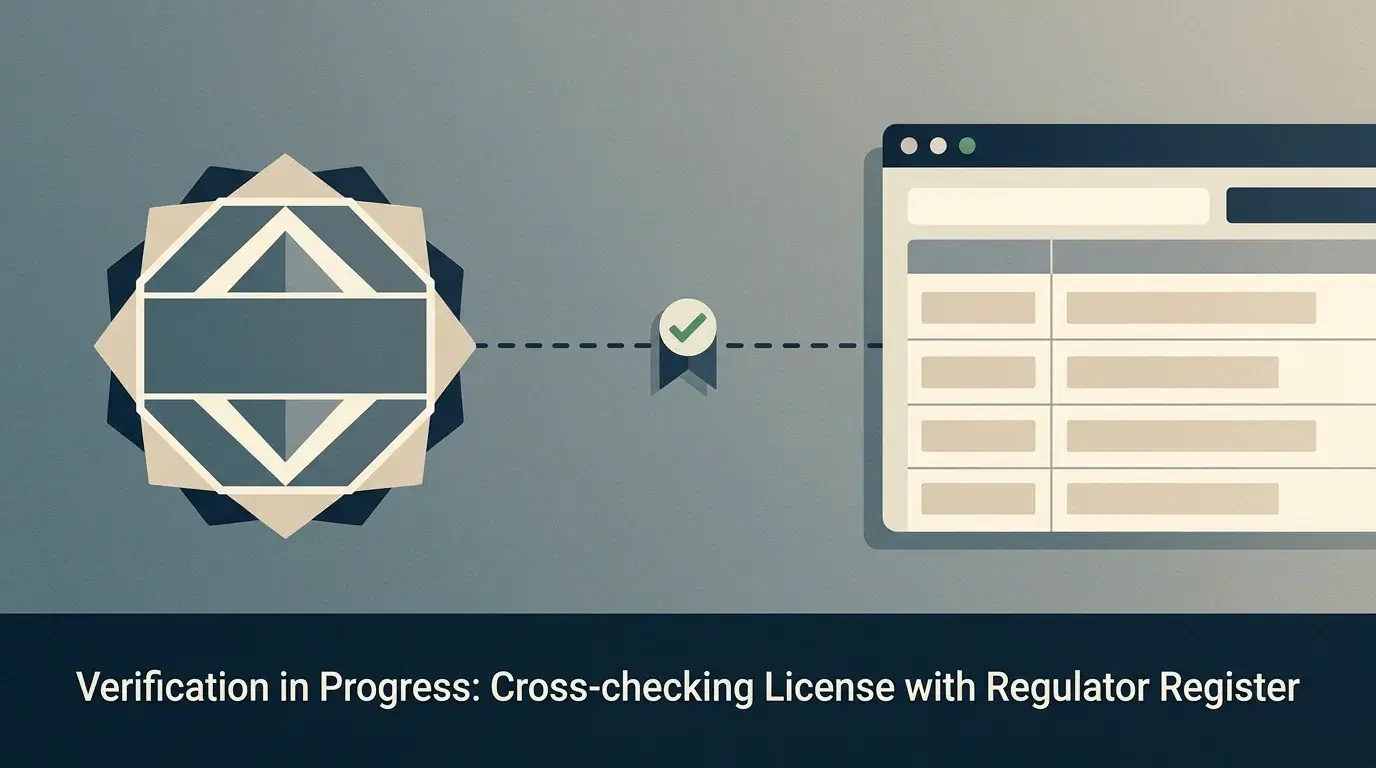
If you nonetheless encounter a non-GamStop site and want to assess the seriousness of its claimed licence, the reasonable checks are short. Find the regulator’s official register, which for Curacao is the public LOK register at the Curacao Gaming Authority, for Malta the MGA’s public register, for Anjouan an authority-verified record through AOFA or ALSI, and for Kahnawake the KGC’s own list. Cross-check the operating-company name and the licence number against the register entry. A seal in the website footer is not a register entry. A licence number on a “we are licensed” page is not a register entry either. Only the regulator’s own search interface, or a written verification from the regulator, is.
What a weaker permit costs the player: the risk guide.
Operators with disputed or expired licence status, or with attribution inconsistencies between the corporate filings and the marketing pages, appear repeatedly across independent reviews of the segment. Cross-checking against complaint threads at large consumer-protection sites is a sensible second step. None of these checks restore the British player’s UKGC dispute-resolution route or replace the GamStop protection that an offshore licence does not provide, but they at least separate operators that are real and verifiably licensed in their home jurisdiction from operators that are not.
This material was created by the GamStop Bypass Casino team.
Related posts
Terms of Use

UK Gambling Casino Sites and Slots: What to Check