
How UK Gambling Regulation Shapes the Non-GamStop Casino Market
 Available in GB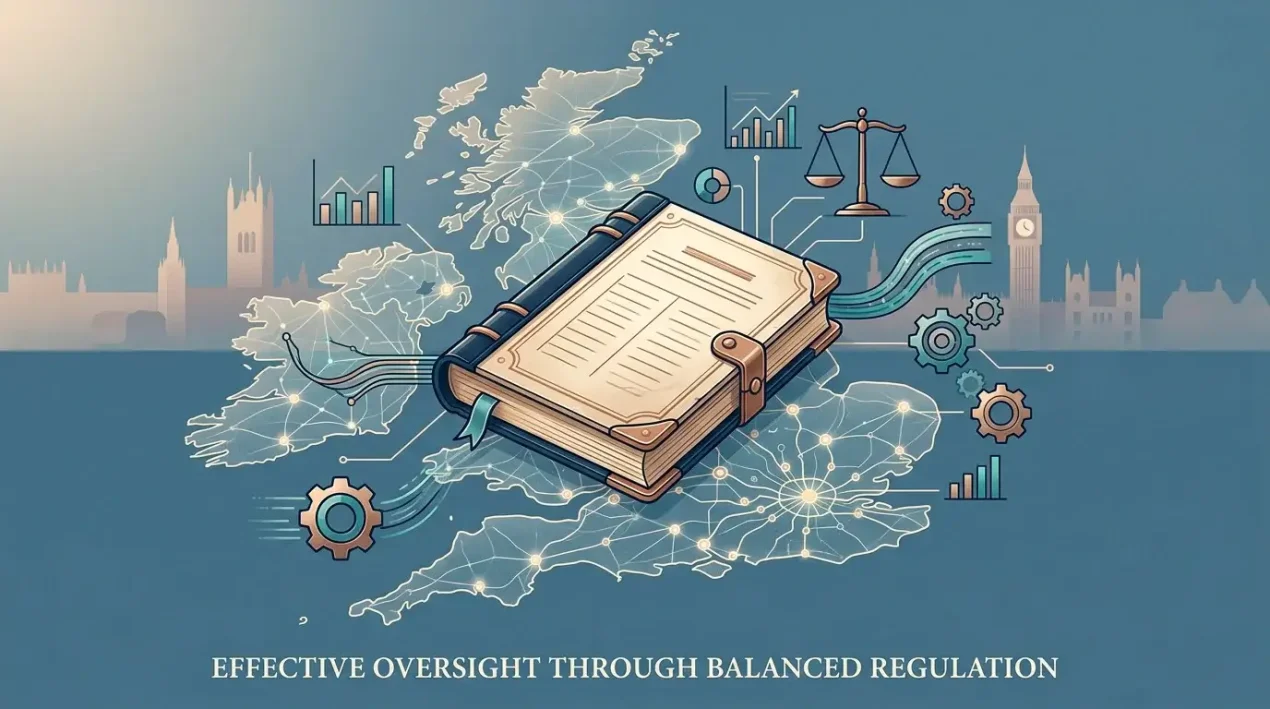
The non-GamStop casino market is not an accidental loophole. It is a direct, predictable consequence of how Britain has built and reformed its gambling regulation over the past two decades, and especially over the past twenty-four months. This page sits at the centre of the regulation cluster on this site and explains the framework that creates the offshore segment, before routing you into the supporting pages that examine the self-exclusion mechanism, the legal position of British players, and the offshore licensing jurisdictions in detail.
The full picture is in our guide to casinos not on GamStop.
The Gambling Commission Sets the Boundaries of the British Market
The single most important institution in this story is the Gambling Commission, commonly abbreviated to UKGC. Created by the Gambling Act 2005, the Commission licenses and regulates arcades, betting, bingo, casinos, slot machines, lotteries, and all forms of remote gambling. Spread betting and the National Lottery sit outside or partly outside its core remit, and local licensing authorities issue premises licences for physical venues, but the Commission is the central regulator for almost everything a British player encounters online. It issues operating licences to companies and personal management licences to senior individuals, and it enforces compliance through a graduated set of tools that ranges from settlement payments to full licence revocation.

The Commission operates under three statutory licensing objectives that were written into the Gambling Act 2005 and that continue to shape every regulatory decision: keeping gambling crime-free, ensuring it is conducted fairly and openly, and protecting children and other vulnerable people. Almost everything that has changed in British gambling policy over the past few years can be traced back to the third objective. Player protection has moved from being a generalised duty to a granular set of operational requirements covering identification, financial monitoring, marketing controls and game design.
Integration with the national self-exclusion scheme sits inside that protective architecture. From 2020, with full enforcement from 31 March 2021, integration with GamStop became a mandatory licence condition for every UKGC-licensed remote operator. The practical effect was binary: any company holding a Commission remote operating licence had to query the GamStop database in real time, and any company that did not hold such a licence had no such obligation. That single line of policy created the structural gap that the rest of this cluster examines. The technical mechanics of how the matching works, why it stops at the licence boundary, and what its known limitations are, are covered in detail in how GamStop self-exclusion works.
The Point of Consumption Rule Pushes Offshore Operators Outside the British Licensed Market
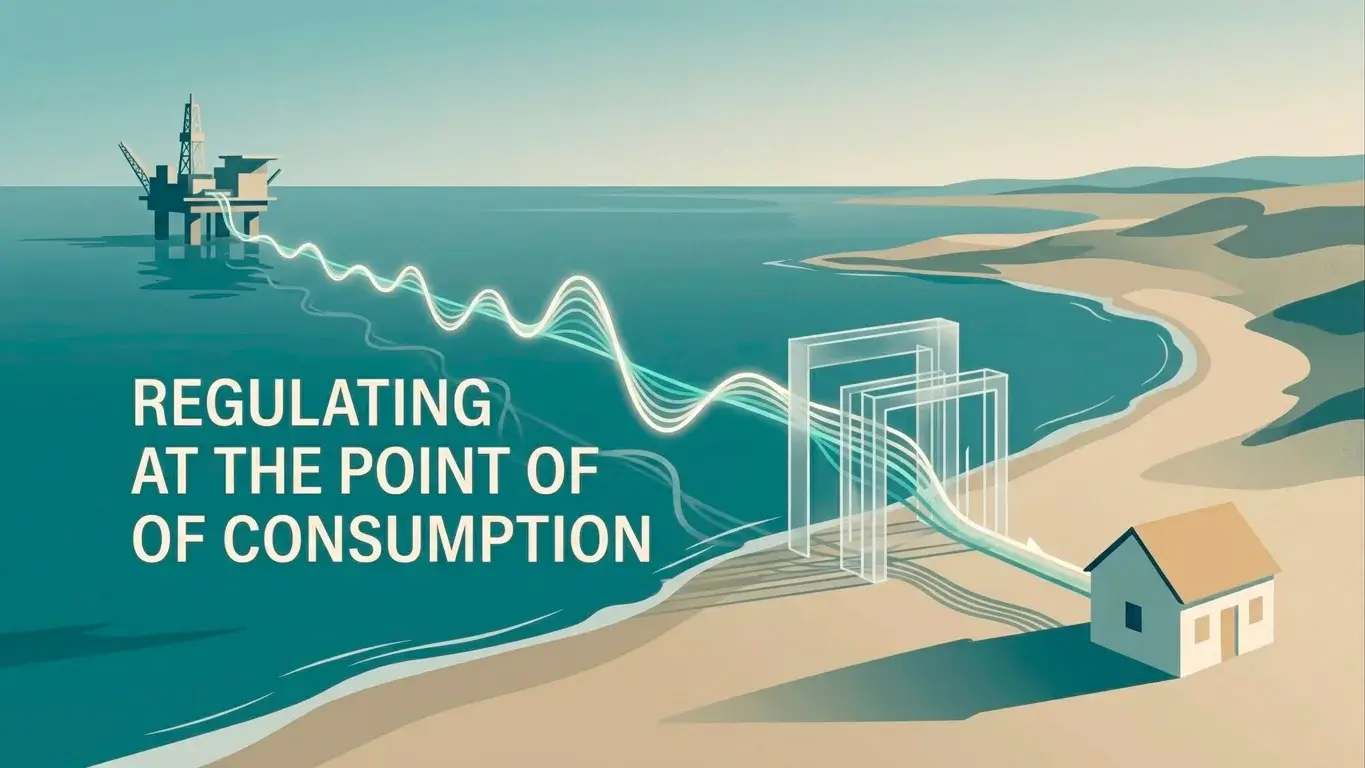
Before 2014, an operator could serve British customers from an overseas base without holding a Commission licence, provided it was licensed in a recognised jurisdiction. The Gambling (Licensing and Advertising) Act 2014, in force from 1 November 2014, closed that gap. From that date, the test became where the customer is, not where the operator is. Any company providing facilities for gambling that are used in Great Britain needs a UKGC licence, regardless of which other regulator it answers to.
That principle is reinforced by a criminal offence. Section 33 of the Gambling Act 2005 makes it an offence to provide facilities for gambling without a licence, with maximum penalties of imprisonment for up to 51 weeks and an unlimited fine. Section 36, amended in 2014, sets out the territorial test for remote gambling and introduced the now-familiar wording that an operator commits the section 33 offence if its facilities are used in Great Britain or the remote-gambling equipment is in Great Britain. Section 36(3A) further restricts the offence to operators that “know or should know” their facilities are being or are likely to be used in Britain, which is why offshore casinos routinely geo-block UK traffic and place explicit terms-of-service exclusions on British residents.
The consequence for the non-GamStop market is precise. A casino licensed in Curacao, Anjouan or Malta is unlicensed for British purposes the moment it accepts a British customer, regardless of how reputable its home regulator may be. That is the technical, legal fact behind the phrase “casino not on GamStop”. The detailed legal status for British players, including why the section 33 offence sits on the operator rather than the player, is covered in what UK law actually says about playing offshore. The licence landscape itself, including the Curacao LOK reform, the Anjouan regime that explicitly bars British customers, and the position of the Malta Gaming Authority, is examined in offshore licence jurisdictions for UK players.
The 2025-26 Reform Wave Has Made the Licensed Market More Expensive and the Offshore Market More Visible
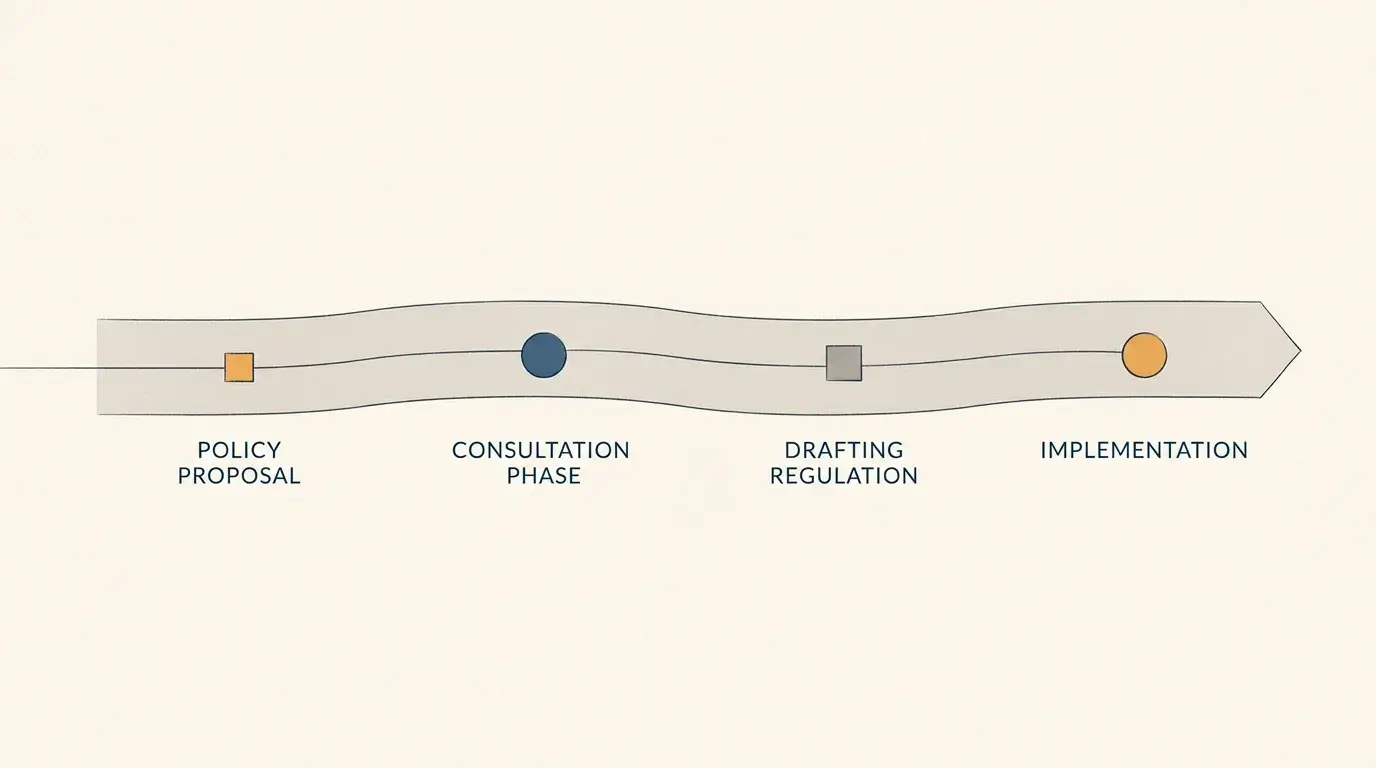
The reform wave that began with the April 2023 White Paper “High Stakes: Gambling Reform for the Digital Age” has now arrived, and it represents the most concentrated period of policy change in British gambling for two decades. The cumulative effect is visible on every UKGC-licensed site and audible in the commentary of every industry trade body. It is also, in the analysis of multiple legal and accounting firms, the central driver of renewed consumer interest in offshore play.
Statutory online slot stake limits arrived first. From 9 April 2025, players aged 25 and over face a £5 cap per spin on online slots, and from 21 May 2025 players aged 18 to 24 face a £2 cap. These limits were introduced through The Gambling Act 2005 (Operating Licence Conditions) (Amendment) Regulations 2025 and apply only to UKGC-licensed sites; they do not exist on offshore platforms. Affordability or financial vulnerability checks have followed a similar trajectory, with light-touch background checks reported at a £150 net-loss threshold from February 2025 and enhanced manual checks for higher-spending players. None of these checks apply offshore, which is itself a structural reason that some high-stakes British players look beyond the licensed market.
The statutory gambling levy, set out in The Gambling Levy Regulations 2025 and in force from 6 April 2025, replaced the previous voluntary funding model with a percentage charge on Gross Gambling Yield payable by every UKGC-licensed operator. The remote sector pays the highest band, around 1.1 per cent, with the levy expected to raise approximately £100 million a year for research, prevention and treatment, split roughly half to NHS-led treatment, three-tenths to prevention and one-fifth to research. First invoices were issued in September 2025 and first payments fell due before 1 October 2025.
The most consequential single measure for operator economics arrived in the Autumn Budget 2025. The Remote Gaming Duty rose from 21 per cent to 40 per cent for accounting periods beginning on or after 1 April 2026, almost doubling the tax burden on every pound of profit generated by online casinos, slots and similar remote gaming products serving British customers. A new 25 per cent remote rate within General Betting Duty follows on 1 April 2027, while remote bets on UK horse racing remain at 15 per cent, and Bingo Duty is abolished from April 2026. The Government itself expected operators to pass up to 90 per cent of the duty increases on to consumers through worse pricing and lower payouts, with industry bodies and analysts at BDO, Kennedys and Deloitte warning that the gap between licensed and offshore product will widen further as a direct result.
Marketing rules have moved in the same direction. Wagering requirements on bonuses were capped at a reported tenfold multiple, and a ban on mixed-product promotional offers took effect in January 2026. Each of these changes has a defensible consumer-protection rationale, and the harm-reduction logic is set out plainly in the Commission’s own policy papers and the Department for Culture, Media and Sport (DCMS) White Paper. Taken together, however, they also sharpen the commercial differential that offshore sites use in their marketing. The supporting page on spotting unsafe offshore casinos sets out why the commercial differential is not the same thing as a safety differential, and why the absence of UK consumer-protection rules offshore is a risk in both directions.
British Enforcement Against Unlicensed Sites Is Escalating
The other side of the same reform wave is enforcement. The Commission has long used cease-and-desist notices, payment-flow disruption and search-engine deindexing referrals to make unlicensed offshore sites harder to find and harder to bank with. Throughout 2025 and into 2026 that activity has scaled materially. The Government’s Crime and Policing Bill, introduced to Parliament in February 2025, is expected to grant the Commission further powers to act against illegal gambling websites, and in 2026 the Commission received a reported additional £26 million in government funding earmarked for enforcement against illegal sites.
A new Illegal Gambling Taskforce, led by the DCMS, was established in 2026 to bring the regulator, payment providers, technology platforms, law enforcement and industry into a single coordinating body for disruption of unlicensed offshore activity. Its terms of reference were published in May 2026. Separately, the DCMS confirmed on 23 February 2026 that it would consult on a prospective ban on UK sports-team sponsorship by operators not holding a UKGC licence, building on the regulatory warnings issued in the Stake-Everton and TGP Europe sponsorship cases. Those cases turned on section 330 of the Gambling Act 2005, which makes advertising unlawful gambling an offence and which applies to entities promoting unlicensed operators where the advertised gambling is reasonably likely to be used in Britain.
The cumulative effect is that the visible surface of the offshore market has shifted. Search results for “casino not on gamstop” remain dominated by affiliate review portals, but the actual operators behind those listings face a more hostile payments environment, a more hostile sponsorship environment, and a more hostile search-engine environment than they did even twelve months ago. None of this changes the underlying legal point that the section 33 offence sits on the operator, not on the player, but it does change the practical experience of running an unlicensed offshore site that targets British customers.
The Three Supporting Pages Take Each Strand Further

This page is the entry point to a three-page deep dive. The first supporting page sets out the mechanics of the GamStop scheme itself, including how the real-time database matches new registrations and logins against active exclusions, why that matching only reaches UKGC licence holders, and the historical and current limitations of the model. You can read it at how GamStop self-exclusion works and why it stops at UK borders. The second supporting page focuses on the legal position of British players themselves, separating the operator offence under section 33 from the personal legal position of a UK resident who places a bet at an offshore site, and explaining why winnings remain tax-free regardless of jurisdiction. You can read it at what UK law actually says about playing at a casino not on GamStop. The third supporting page works through the offshore licence jurisdictions in turn, including the Curacao LOK reform that came into force on 24 December 2024, the Anjouan regime which explicitly excludes the United Kingdom from its licence terms, and the position of higher-tier permits such as those issued by the Malta Gaming Authority. It is at Curacao, Anjouan and Malta licences explained for UK players.
The scheme at the centre of it: how GamStop self-exclusion works.
The site index page, the full non-GamStop guide, is the place to begin if you want the broader picture before diving into any one strand. Reading the four regulation pages together will give you the clearest available answer to the questions the affiliate listicles answer only superficially: what kind of operator a “casino not on GamStop” actually is in British law, who is committing an offence and who is not, what the offshore licence actually authorises, and how the British regulator is responding.
This material was created by the GamStop Bypass Casino team.
Related posts

Terms of Use

UK Gambling Casino Sites and Slots: What to Check