
What UK Law Actually Says About Playing at a Casino Not on GamStop
 Available in GB
The most frequently asked question about casinos not on GamStop is also the one most often answered badly. Affiliate listicles describe the legal position as “a grey area”; the reality is far more specific. UK gambling law makes a clean distinction between the position of the operator and the position of the player, and it does so through a small number of named provisions of the Gambling Act 2005 as amended in 2014. This page sets out what those provisions actually say, what they do not say, and what the practical legal landscape now looks like in 2026.
The full picture is in our guide to casinos not on GamStop.
The Operator Offence Lives in Section 33 of the Gambling Act 2005
The single most important provision is section 33 of the Gambling Act 2005. It makes it a criminal offence to provide facilities for gambling without a Gambling Commission operating licence, a permit, or specific statutory authorisation. The offence is tried summarily, with a maximum penalty in England and Wales of imprisonment for up to 51 weeks, a level 5 fine on the standard scale, or both. In Scotland the maximum custodial term is six months. The text and the explanatory notes are publicly available at legislation.gov.uk.
Two points often get lost when the provision is summarised. First, the section 33 offence is the operator’s offence, not the player’s. The Act is consistent about this. The criminal liability sits on the entity providing the facilities. Second, the offence is broadly drawn. Subsection (1) deliberately uses the wide phrase “provides facilities for gambling”, which includes online platforms, marketing infrastructure that funnels players into those platforms in specific circumstances, and ancillary arrangements such as payment processing structured around the unlicensed activity. A non-GamStop casino aimed at the British market is, on a plain reading of section 33, providing facilities for gambling without the required licence.
Section 36 and the 2014 Act Made the Offence Reach Across Borders
The next building block is section 36, which sets out the territorial reach of the section 33 offence in the remote gambling context. As originally drafted, the Gambling Act applied to gambling provided in or from Great Britain. The Gambling (Licensing and Advertising) Act 2014, in force from 1 November 2014, rewrote that test for remote gambling. Since then, section 36 has provided that the section 33 offence applies where (a) the facilities are used in Great Britain or (b) the remote-gambling equipment is in Great Britain. The Act introduced a new subsection 33(3A), which qualifies the offence in remote gambling cases by restricting it to operators who knew, or should have known, that their facilities were being or were likely to be used in Britain. The amendment record at section 33 of the Act shows the inserted text and the commencement order.
The “knew or should have known” qualifier is why offshore operators routinely geo-block UK traffic, refuse to accept British debit cards, and add explicit exclusions for British residents to their terms of service. The qualifier does not give them a pass; it allocates the evidential burden. An operator that visibly markets to British players, accepts British currency without restriction, and runs offers tailored to UK betting events while claiming not to know its facilities are being used in Great Britain is unlikely to persuade a court of that claim. The Gambling Commission and the legal community read section 36(3A) the same way, which is why high-profile sponsorship cases involving operators reliant on offshore arrangements have produced enforcement warnings rather than acquittals.
Section 330 Adds an Advertising Offence That Captures Sponsorship
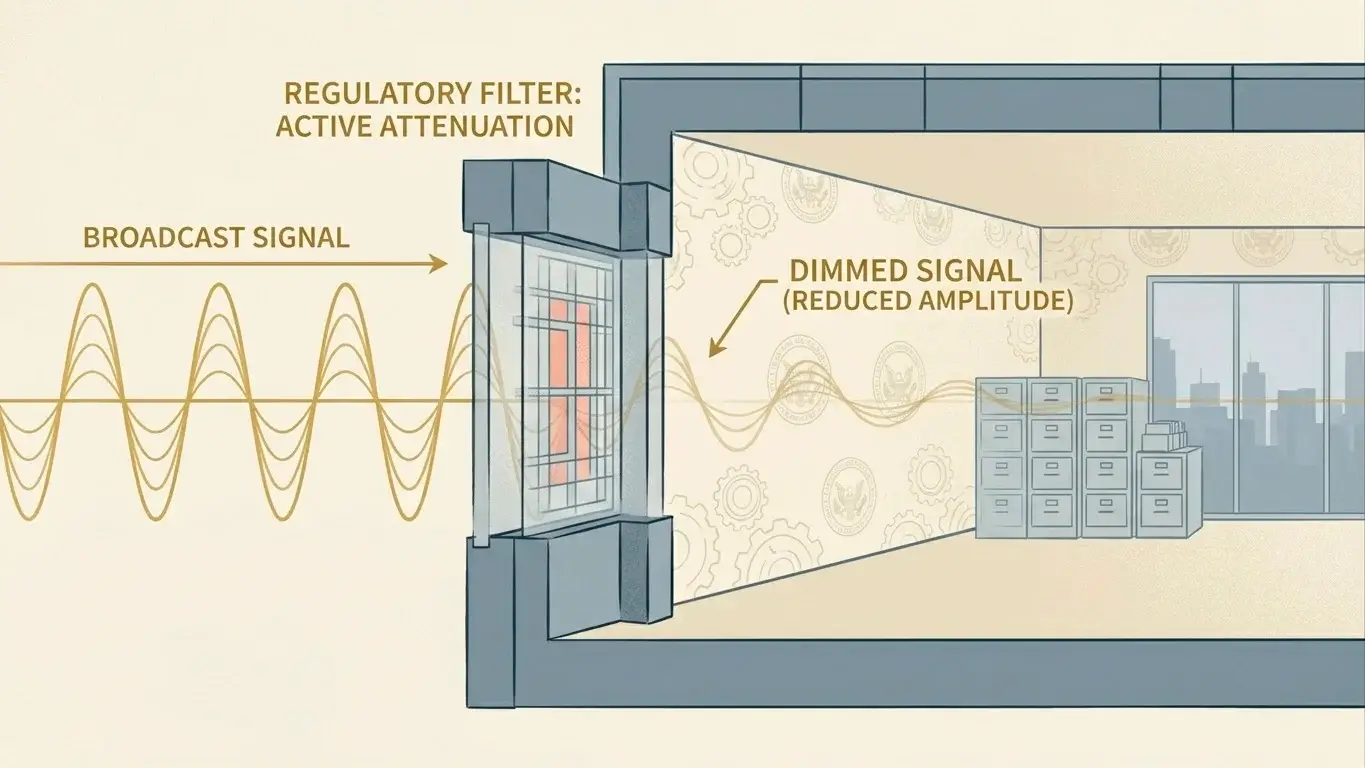
The third provision that matters is section 330, the offence of advertising unlawful gambling. Section 330 applies where someone advertises gambling for which a Gambling Commission licence is required but absent. A defence is available where the advertiser reasonably believed the gambling to be lawful in the territory it was advertised in. The Stake-Everton and TGP Europe sponsorship cases in 2025 turned on this provision. Premier League clubs were warned that promoting operators without UKGC licences could engage section 330, unless those operators effectively geo-blocked Britain. The Department for Culture, Media and Sport announced on 23 February 2026 that it would consult on a prospective ban on UK sports-team sponsorship by operators not holding a UKGC licence, which would broaden the regulatory boundary further. The same provision is the legal hook behind the Commission’s referrals to search engines for delisting of unlicensed sites, and behind its payment-processor disruption work.
Together with sections 33 and 36, section 330 forms a tight operator-liability triangle. An unlicensed offshore casino taking British custom is at risk of section 33. An entity advertising or promoting that casino in Britain is at risk of section 330. A licensed operator that accepts a registration through a flaw in the GamStop matching process commits no section 33 offence but breaches its licence conditions and faces enforcement under the Commission’s regulatory powers rather than under the Act’s criminal provisions. The page on how GamStop self-exclusion works sets out the licence condition that creates that second route.
The Player Position Is Clean: No Section 33 Offence Just by Playing
The Gambling Act 2005 does not criminalise the act of placing a bet at an unlicensed operator. The licensing offence sits on the provision of facilities; gambling itself is a lawful adult activity in Britain. A UK-resident player who deposits at a casino licensed in Curacao or Anjouan and plays a slot does not commit the section 33 offence by doing so. Nor does the player commit a section 330 offence simply by being on the receiving end of advertising. Separate criminal liabilities, such as money laundering, fraud, or use of a payment instrument the player is not authorised to use, are obviously not waived by gambling law, but those are not gambling offences and they apply to all economic activity.
Player winnings, the other big practical question, remain free of personal taxation regardless of where the operator is based. Gambling winnings in the United Kingdom are not income for income-tax purposes, and there is no special rule for offshore gambling that would change that. Interest earned on those winnings once deposited in a savings account is taxable as ordinary investment income, and HMRC treats activity that crosses into professional trading behaviour separately, but the winnings themselves are not taxed. This is unrelated to the operator’s tax position: the Remote Gaming Duty rise from 21 per cent to 40 per cent on 1 April 2026, set out in the Government’s gambling-duty policy materials and in the HMRC policy paper of 26 November 2025, falls on the operator, not on the customer.
There are second-order legal consequences a player should be aware of, however, even though they are not criminal. A British player using an unlicensed offshore operator has no access to the Gambling Commission’s mandated alternative dispute resolution providers, such as eCOGRA or IBAS, because those bodies serve UKGC licence holders. A complaint about a withheld withdrawal must be routed through the operator’s home regulator, an internal complaints process, or in extreme cases overseas civil litigation. The page on the risks of playing offshore covers what that looks like in practice and what reasonable due-diligence steps reduce, though do not remove, the risk.
An Offshore Licence Does Not Authorise British Service
The legal misconception that drives the loudest disagreement on this topic is that a Curacao or Anjouan licence somehow authorises an operator to serve British customers. It does not. A foreign gaming licence authorises the operator to provide gambling subject to the rules of that home regulator and within the geographic and demographic restrictions set in the licence itself. The British market is not within those restrictions for any of the major offshore jurisdictions used by non-GamStop operators. The Anjouan licence framework, for example, explicitly excludes the United Kingdom from the jurisdictions in which the licensed operator may offer services, alongside the United States, France, Germany, Spain, Australia and the Netherlands.
So the legal arrangement of a typical non-GamStop site marketed to British players sits on two stacks. On its home side, the operator runs lawfully under a Curacao, Anjouan or Costa Rican framework. On the British side, it lacks the UKGC licence it would need to lawfully provide its facilities to British customers, and it accepts the resulting section 33 exposure as part of its business model, often offsetting it through geo-blocking efforts, restrictive terms of service, payment-processor diversification and aggressive cash flow management. The reasons each of these offshore licences works the way it does, and the specific position of Anjouan and Malta, are explained jurisdiction by jurisdiction in offshore licence jurisdictions for UK players. The wider regulatory context in which the British side of the arrangement sits is the subject of the regulation and licensing overview at the top of this cluster.
British Enforcement Against Unlicensed Offshore Operators Is Hardening
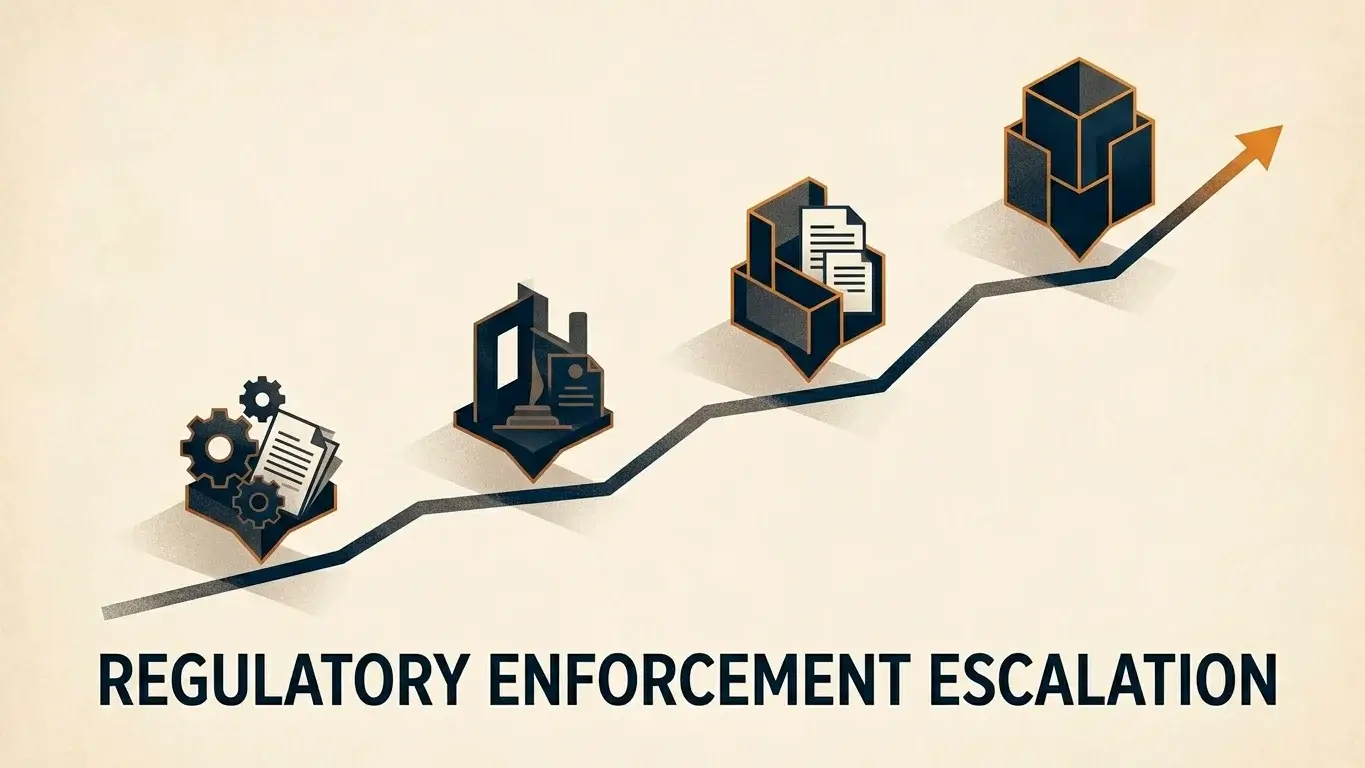
The legal framework has not changed in substance since 2014, but the enforcement environment has accelerated. The Gambling Commission has expanded its work with search engines on URL referrals, with reported sharp increases in 2025. It has stepped up disruption of payment flows to unlicensed sites, working with banks and card networks. It has continued to issue cease-and-desist notices, and in November 2025 it suspended the licence of a major game-supply company over compliance failings, which the Commission’s own announcement framed in the language of section 33 maximum penalties.
The Crime and Policing Bill, introduced to Parliament in February 2025, is expected to extend the Commission’s powers to act against unlicensed websites still further. The Commission received a reported additional £26 million in government funding in 2026 to expand that enforcement work. A new Illegal Gambling Taskforce, led by the Department for Culture, Media and Sport, was set up in 2026 to bring the regulator, payment providers, technology platforms, law enforcement and industry together; its terms of reference were published in May 2026. None of this changes the player position summarised above, but it does change the practical exposure of any operator running a non-GamStop site aimed at the British market.
The Bottom Line in Two Sentences
A British player who deposits at a non-GamStop casino does not, by that act, commit a criminal offence in British law, and winnings remain free of personal taxation. The operator on the other side of that transaction is, however, unlicensed for UK purposes the moment it accepts British custom, faces criminal exposure under section 33 and an advertising offence under section 330 in respect of marketing in Britain, and operates in an enforcement environment that has become measurably tougher over the past twelve to eighteen months.
The licences behind those operators: Curacao, Anjouan and Malta.
The page on the risks and due-diligence guide covers what the absence of UK consumer-protection law actually feels like on the other side of a deposit, including the absence of UKGC-mandated ADR, the absence of affordability checks, and the recurring scam patterns documented at AskGamblers, GamCare and the Commission’s own enforcement archive. The broader picture, including how the regulatory reform wave of 2025-26 connects to all of the above, is at the full non-GamStop guide.
This material was created by the GamStop Bypass Casino team.
Related posts

Terms of Use

UK Gambling Casino Sites and Slots: What to Check