
UK Casino Sites That Accept Credit Cards: The Rules
 Available in GB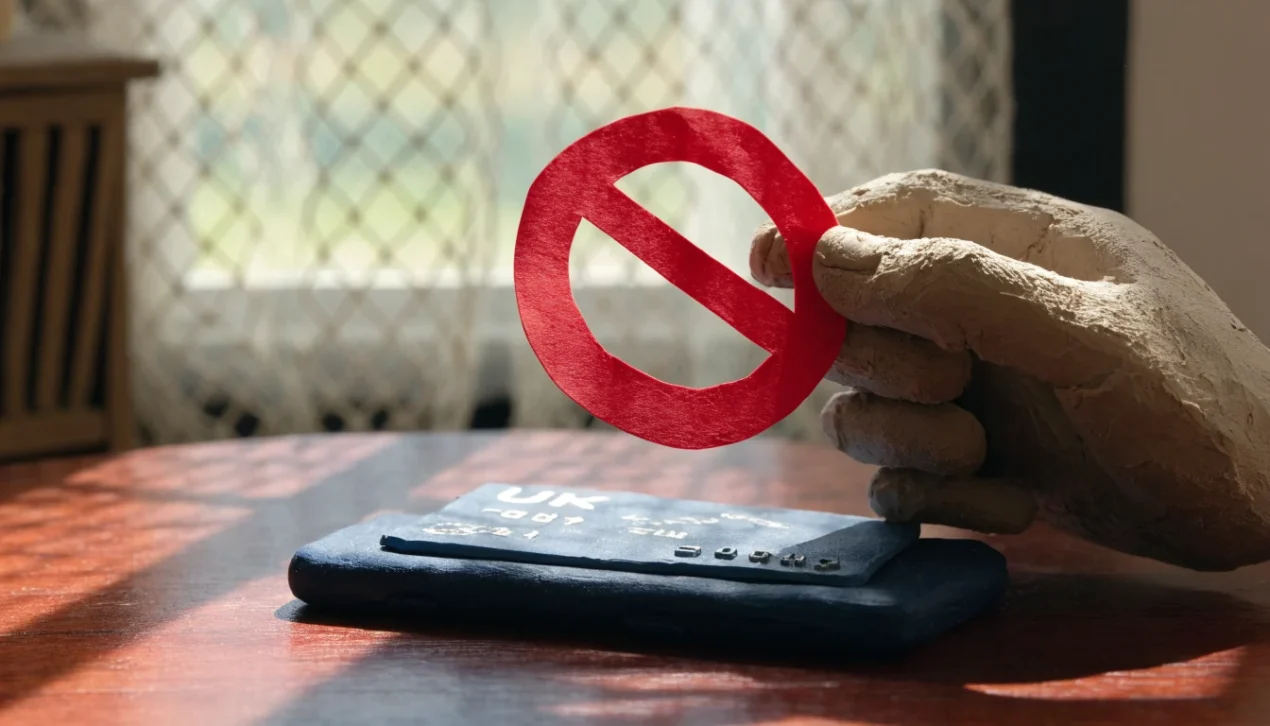
UK-licensed casinos cannot take credit-card payments for gambling, and the restriction also covers arrangements that disguise the source of funds.
The UK Credit Card Gambling Ban: What It Means in 2026
If you are looking for a credit card casino in the UK, the first thing to clear up is the legal position: UK-licensed casinos cannot accept credit-card payments for gambling. That applies to online casino deposits and other forms of remote gambling covered by the licence. A casino may display card logos elsewhere on its website, but that does not make credit-card gambling permitted.
The restriction has been in force since 14 April 2020. It was introduced by the UK gambling regulator as a consumer-protection measure, aimed at stopping people from funding gambling with borrowed money. The rule has not been relaxed. In 2026, a remote gambling licensee serving the British market still cannot take a credit card as a gambling payment.
That is the short answer. No credit card deposits at UK-licensed casinos.
What the ban covers
The ban is broader than a cashier simply rejecting a card marked “credit”. It concerns credit-card payments for gambling, including arrangements designed to disguise where the funds came from. A payment cannot be made acceptable merely because it passes through another service first.
The same principle applies to wallets and money service businesses. If the route allows credit-card funds to be used for gambling, a remote gambling licensee cannot accept that payment for the gambling account. Calling the route a wallet or intermediary does not change its character.
This matters because payment branding can be misleading. A familiar Visa or Mastercard symbol does not, by itself, tell you whether the card is being treated as a debit product or a credit product. The permitted status depends on the actual payment route and product, not just the logo printed on the card.
Casino Payments: UK Deposit and Withdrawal Options
Why the restriction remains important
Gambling with borrowed funds can make losses harder to control. A debit balance is visible in your bank account; credit creates a separate obligation that may remain after the gambling session has ended. The regulator’s position is reflected in a firm prohibition rather than a warning displayed at the point of deposit.
I made the mistake of treating a declined card as a technical nuisance once. It was tempting to look for a workaround and assume that a different route would solve the problem. That is the wrong way to read the refusal. At a UK-licensed casino, the issue is not that the cashier needs persuading. The payment category is restricted.
No clever detour.
The rule applies to casinos operating under the UK framework for customers in Great Britain. Remote gambling licensees offering gambling to consumers in England, Scotland and Wales must hold the relevant Gambling Commission licence, and the credit-card restriction forms part of the conditions for operating in that market.
Northern Ireland has a separate legal framework from the Gambling Act 2005, which governs gambling in England, Wales and Scotland. That distinction does not turn a UK-licensed online casino into a place where credit-card gambling is available. The practical point for a customer using a casino presented as serving the British market remains the same: a UK-licensed operator cannot accept credit cards for gambling.
What “allowed” means in practice
When people ask whether credit cards are allowed at UK online casinos, they may mean two different things:
- Can a credit card be used to fund casino play?
- Can the card appear in a general list of payment methods or be used for a non-gambling transaction?
For gambling deposits, the answer is no at UK-licensed casinos. The rule concerns the use of the payment for gambling, not simply whether a card brand is mentioned on a page.
That distinction also explains why a website can contain broad payment information without proving that a particular card product is eligible. Payment pages can cover more than one market, change as providers update their services, or use “card” as a general label. The legal restriction still takes priority over casual wording.
You should also separate the legal rule from a casino’s internal cashier behaviour. A declined transaction, a missing option and a message asking you to use another route may look different on screen, but none of them creates permission to use a credit card. The operator has to follow the restriction even if a payment provider appears technically capable of processing the transaction.
The ban is therefore not a temporary policy, a promotional condition or a preference set by individual casinos. It is a standing requirement for UK-licensed remote gambling. A casino cannot override it by changing the name of the payment method, routing the funds through a wallet that accepts credit-card money, or describing the transaction in softer language.
The main rule
UK-licensed casinos cannot accept credit card payments for gambling.
For a player, the useful conclusion is uncomplicated: do not treat a credit card as an available gambling funding method at a UK-licensed casino in 2026. If a page seems to suggest otherwise, the wording needs to be examined carefully against the operator’s actual status and payment route. The date to remember is 14 April 2020 — the start of the UK credit card gambling ban, which remains in effect.
Why a Credit Card Won’t Work at a UK-Licensed Casino
The direct answer is no: you cannot use a credit card to fund gambling at a UK-licensed casino. That covers online casino deposits, casino games and slots. If your plan is to deposit with a credit card and then play, the transaction should be refused rather than treated as an ordinary card payment.
The restriction has been in force since 14 April 2020. It has not been relaxed. So the answer is the same whether you are asking about a general casino balance, a particular online game or playing slots with a credit card: a UK-licensed remote gambling operator cannot accept the credit-card payment for that gambling activity.
Why the card type matters
A credit card is not simply another version of a debit card in this context. The rule is aimed at preventing gambling from being funded with borrowed money. That means the operator must identify and block credit-card payments used for gambling, rather than accepting them because the card itself is issued by a familiar network.
Casinos That Accept Wirecard in the UK: What to Know · Casinos That Accept Echeck in the UK: Payment Guide
I once assumed that a payment marked as a normal card transaction would be judged only by the casino’s cashier. That was the wrong way to look at it. The important point is how the funds are sourced and used, not how tidy the payment screen appears.
A declined transaction may show a generic message, or the cashier may remove the card option altogether. Either way, trying the same card repeatedly will not turn it into an allowed deposit method.
Can you use a credit card for online gambling?
Not at a casino holding a UK Gambling Commission licence. The ban applies to credit-card payments for gambling, including payments made directly to a remote gambling licensee. It is not limited to one type of casino game, one card brand or one style of account.
That includes attempts to:
- fund a casino account with a credit card;
- deposit specifically to play slots;
- use a credit card for casino table games;
- use a credit card to continue gambling after an earlier balance has run out;
- treat a cash advance from a credit card as gambling money.
The wording may change between operators, but the outcome should not. A UK-licensed casino cannot accept credit cards for gambling.
Routing the payment through another business
Changing the name in the middle of the transaction does not solve the problem. Remote gambling operators cannot accept credit-card payments routed through a money service business. A payment does not become acceptable merely because the card issuer sends the funds first to another payment intermediary before they reach the gambling account.
This matters because a payment page can make a route look separate from the casino. You might see a service provider, a card-processing screen or an account top-up step rather than the casino’s own name. That does not change the underlying source of the money. If credit-card funds are being used for gambling through that route, the restriction still applies.
In plain English: moving the money around is not a loophole.
DO
- Use a debit card issued by a recognized network
- Check the live cashier after logging in
- Ensure the account and payment holder names match
DON’T
- Attempt to use a credit card for deposits
- Rely on a website headline or brand logo as proof of eligibility
- Use a wallet that allows credit-card funds for gambling
What about a wallet funded by a credit card?
The same principle applies to wallets. A UK remote gambling operator cannot accept a wallet payment where that wallet allows credit-card funds to be used for gambling. The wallet does not erase the original funding source.
That closes off a common assumption: deposit into a wallet with a credit card, then use the wallet at the casino. If the wallet permits those credit-card funds to finance gambling, the gambling payment remains prohibited. Calling it a wallet transaction instead of a card transaction does not change the position.
This is why the payment route needs to be considered as a whole. The final screen may display the wallet’s name, but the relevant question is whether credit-card money is being used for the gambling deposit.
Does this also cover slots?
Yes. There is no separate credit-card exception for slots. You cannot use a credit card to fund an online casino account and then play slots at a UK-licensed operator. The game type does not alter the payment rule.
The same answer applies if you describe the transaction as buying spins, adding gaming funds or topping up a balance. Those are different descriptions of activity within the same gambling account; they do not create a permitted credit-card route.
A card payment that might be accepted for an ordinary retail purchase is not automatically acceptable for gambling. The merchant category and the purpose of the payment matter here.
Casinos That Accept Citadel in the UK: How to Check
Why a payment might appear to go through
A temporary authorisation is not proof that the deposit is allowed. Card processing can involve several stages, and a displayed confirmation may relate only to an initial payment check. An operator can still reject, reverse or investigate a transaction if it identifies that credit-card funds were used for gambling.
The safest reading is simple: do not treat a pending card transaction as permission to gamble with the money. If the card is a credit card, do not rely on a wallet, intermediary or payment label to change its status.
I learned this the annoying way with payments generally: “accepted” on one screen can mean little until the transaction has actually settled. With credit-card gambling, the underlying restriction is the part that matters.
The practical answer
If you are asking whether a credit card can be used at a UK-licensed casino, the answer is no. If you are asking whether it can be used at an online casino to play slots, the answer is still no. Direct card deposits are prohibited, and the rule also covers credit-card funds routed through a money service business or through a wallet that allows those funds to be used for gambling.
The ban dates from 14 April 2020 and remains in place. A different payment screen cannot make a prohibited source acceptable.
What “Credit Card Casino” Means on a UK Search Page
The phrase “credit card casino” looks straightforward, but in Britain it can describe several different things. It may refer to an old review, a foreign-facing page, a payment-method comparison, or a site using loose wording for casinos that accept cards generally. It does not, by itself, prove that a UK-licensed casino will accept a credit card deposit.
Brand Logos
Visa and Mastercard logos identify the network, not whether the specific card product is a debit or credit card.
That distinction matters because the UK ban on credit-card gambling remains in force. The regulator introduced it on 14 April 2020, and it has not been relaxed. A remote gambling licensee serving British customers cannot accept credit-card payments for gambling. So a page describing “UK casinos that accept credit cards” should not be read as confirmation that a credit card can be used at a UK-licensed cashier.
The wording may be familiar. The payment route is what counts.
Why the label can be misleading
Online payment pages often use broad labels. A headline may mention “credit card casinos” because the page is built around what people are looking for, while the actual information concerns card brands, debit cards, or casinos outside the UK regulatory system. The headline is not the same thing as a transaction instruction.
I have made this mistake myself. I once treated a large Visa or Mastercard logo as an invitation to use any card carrying it. That was too quick. A card network name identifies the brand, not the card product, funding source, customer location, or gambling restrictions attached to the transaction.
This is why the following phrases should be treated carefully:
- “accepts cards” may mean debit cards rather than credit cards;
- “Visa and Mastercard casino” may describe the network logos shown in a general payment list;
- “credit card casino” may be historical wording left on an older page;
- “casino card deposits” may refer to cards in general, without separating debit and credit products;
- “credit card alternatives” may lead to a list of payment methods that do not involve credit-card gambling at all.
None of those labels overrides the UK rule.
A brand logo is not a product guarantee
Visa and Mastercard are payment networks. They do not tell you whether a particular card is a debit card, a credit card, or another card product. They also do not establish that a transaction is eligible for gambling payments in Britain.
A page can therefore show Visa or Mastercard while the available route is limited to eligible debit cards. The cashier may distinguish card types, reject a card at the issuer stage, or remove the method for a particular account. The logo is only the first layer of information.
This is especially easy to miss when a payment page uses one icon for several card products. The wording can look positive even though the practical option is narrower. “Visa accepted” is not the same statement as “credit-card gambling permitted”.
The same applies to searches for slots that accept credit cards. A slot does not accept a payment card itself. The casino account is funded through a payment method, and the legality of that funding route is determined before the game is played. Changing from table games to slots does not create an exception.
What may sit behind a foreign or offshore result
Some results use “credit card casino” in connection with operators outside the UK market. An offshore casino operates outside the UK Gambling Commission system and does not hold a UKGC licence. Such a page may present a credit-card route because it is describing another jurisdiction’s rules, its own payment arrangements, or an audience beyond Great Britain.
That does not make the route available at a UK-licensed casino. It also does not turn an offshore operator into a UK-licensed remote gambling licensee.
Offshore Operators
Some results describe casinos operating outside the UK regulatory system. These operators may allow credit-card payments because they are not bound by the UK Gambling Commission’s restrictions, but they are not UK-licensed services.
The distinction is important for phrases such as “credit card casino not on GamStop”. They can point towards offshore gambling rather than a British licensed service. The wording may suggest a way around a restriction, but it should not be confused with an ordinary UK payment option. A foreign page and a UK cashier are governed by different arrangements.
A British player is not made safer or better informed merely because a result appears in a UK-focused search. The relevant question is whether the operator is serving the British market under the required licence and whether the proposed payment route complies with the UK credit-card restriction.
“Credit card alternatives” is a different subject
Another source of confusion is the phrase “credit card alternatives”. A page may use the term because the reader wants the same convenience as a card deposit, not because credit cards are actually available. The alternatives may include debit cards, bank transfer, open banking, or an electronic wallet.
Those methods should not be described as credit-card payments. A debit card is a separate product. A bank transfer is a separate payment route. An electronic wallet is not automatically acceptable either: where a wallet permits credit-card funds to be used for gambling, the restriction still matters.
The clean wording is therefore more specific:
- a debit-card deposit is not a credit-card deposit;
- a payment service funded from a bank account is not the same as credit-card gambling;
- an account balance does not erase the origin of funds;
- a payment icon does not confirm that every card or funding source is eligible.
That may sound like splitting hairs. It is not. The difference determines whether the proposed transaction can be accepted.
Why old pages can remain visible
Payment information changes, but web pages do not always keep pace. A review written before the ban, or copied from older material, can continue describing credit-card deposits long after the rule changed. Another page may use a template written for several countries and leave the same wording in place for Britain.
There can also be a gap between a general payment page and the account cashier. A general page may list card brands, while the logged-in cashier applies the account’s country, currency, card type, and current payment configuration. The latter is the practical point at which an attempted deposit either has a permitted route or does not.
I have learned not to treat a bold payment badge as stronger evidence than the live cashier. Marketing copy is broad by design. A transaction screen has to deal with the actual account.
How to read “UK casinos that accept credit cards”
When a page uses that expression, separate the claim into smaller questions:
- Is the operator licensed for British customers?
- Is the page talking about credit cards specifically, or cards generally?
- Does the payment information identify debit cards rather than credit cards?
- Is the wording current, or could it be inherited from an older template?
- Does the live cashier show an eligible method for the account?
- Is the payment being funded directly, or through a wallet or money service business?
The first question is about the operator. The second and third concern the language used. The fourth concerns whether the information is current. The final questions concern the actual transaction route.
A result that cannot answer those questions may still be useful as a starting point, but it should not be treated as proof that a credit card can be used.
“Best” does not change the rule
Searches for the “best credit card casino sites” often encourage a comparison based on bonuses, games, or payment branding. None of those features changes the restriction on credit-card payments for gambling in Britain. A site does not gain an exception by being popular, by displaying Visa and Mastercard, or by describing itself as card-friendly.
The same applies to claims about “credit card deposits”. If the operator is a UK-licensed remote gambling licensee, the description cannot lawfully create a credit-card route where the rules prohibit one. If the operator is offshore, the page is not describing a UKGC-licensed service.
Misleading Labels
Do not assume a site is compliant just because it uses terms like "credit card casino" or displays major card logos.
It is worth keeping the language precise:
“Credit card casino” can be a search label. It is not proof of an available UK payment method.
That is the useful translation.
Where Visa and Mastercard fit
Visa and Mastercard may appear among the payment methods shown by casino sites. A specialist review can list those brands when describing the payment options displayed across the sites it examined. That does not mean every Visa or Mastercard product is available to every British customer, and it does not establish that credit cards can be used for gambling.
Current UK availability and card-product eligibility have to be checked in the cashier. The live payment screen is where the account and the available method meet. A card brand shown in general information remains only a general indication until the specific route is presented for that account.
This is also why “credit card casino sites UK” and “casino sites that accept credit card deposits UK” should not be taken literally as a ready-made list. The wording may combine a reader’s preferred funding method with a broad card label, even though the permitted option is a debit card or another route.
The practical translation
When you see a page using credit-card language, read it as a description that needs unpacking, not as permission to deposit. It may mean:
- the page discusses card payments in general;
- Visa or Mastercard logos are shown without identifying eligible products;
- the information was written for more than one country;
- an offshore casino is being described;
- the page is offering alternatives to credit-card gambling;
- the wording is outdated.
For a UK-licensed casino, the decisive point is not the headline or the logo. Credit-card payments for gambling remain prohibited, including routes that try to disguise the source through an intermediary or a wallet that permits credit-card funding.
The phrase may attract attention. It does not rewrite the rule.
Check the Cashier Before You Try to Deposit
A payment logo on a casino page is not the same thing as a usable deposit route. I have learned that the irritating way: a method can appear in a general banking list, then disappear when the cashier checks your account, location or card type. The screen shown at the actual deposit stage is the one that matters.
This is especially important when you arrive looking for an online casino credit card deposit in the UK. A page may use broad wording about cards, while the cashier distinguishes between permitted debit-card payments and a credit-card product. Do not treat the word “card” as a promise that every card will work.
Start with the cashier, not the payment banner
Open the operator’s deposit page only after signing in. Remote gambling licensees often show a wider selection before account details are applied. Once you are logged in, the cashier can display the methods available to your account and the restrictions attached to them.
Check the following points:
- Which payment methods are active rather than merely described on an information page.
- Whether the card option is identified as Visa debit or Mastercard debit.
- Whether the cashier asks for a card number, bank details or a separate payment-service login.
- Whether the method is available for a UK account in pounds sterling.
- Whether the displayed route is for deposits only or has a withdrawal option as well.
- Whether the minimum and maximum transaction rules change when that method is selected.
That last detail is easy to skip. I used to read the general list, pick the familiar logo and assume the rest would sort itself out. It did not. The cashier is where the practical conditions become visible.
A specialist review can describe the payment logos it found, while the operator’s live cashier may have changed. Check the live screen and the card-product wording immediately before attempting a deposit.
Read “Visa” and “Mastercard” carefully
Visa and Mastercard are payment networks, not guarantees that a particular card will be accepted. A debit card bearing one of those brands may be available at a UK casino, while a credit card carrying the same brand is not an equivalent option for gambling payments.
The useful question is not simply, “Does this casino take Mastercard?” It is, “What kind of Mastercard does the cashier permit for this transaction?” Look for wording that identifies the product as debit. If the cashier does not make the distinction clear, pause and contact the operator through its support channel rather than guessing.
Cashier Check
- Log in to the casino account
- Open the deposit cashier
- Confirm the card is identified as a debit product
- Verify the payment method is available for your UK account
- Check the account currency and transaction limits
A card may also be rejected for reasons unrelated to the network logo. The issuing bank can decline the transaction, the account may need verification, or the casino may not support that particular card route at that moment. None of those possibilities turns a rejected payment into evidence that another card type is acceptable.
For a search centred on online slots with a credit card in the UK, the sensible check is therefore narrower: log in, open the deposit screen, and confirm the permitted debit-card route. Do not enter details merely to see what happens. A failed attempt can create unnecessary confusion, particularly if the bank app describes the transaction differently from the casino cashier.
Confirm the account and card belong together
Payment checks are not only about the logo. Use an account in your own name and a payment route connected with you. Matching the account holder with the payment holder reduces avoidable ownership questions during a transaction.
This matters at the first deposit and later when you request a withdrawal. A casino may ask for information supporting the payment method or account ownership. If the details do not line up, the operator may need additional checks before processing the transaction.
I now check the name, account currency and payment details before pressing the deposit button. It takes less time than trying to explain an odd mismatch afterwards.
Look at the currency before entering an amount
A page can mention a supported currency without proving that your newly opened account has been set up in it.
Currency Matters
Always verify the currency in your cashier, as conversion spreads can affect the final amount charged by your bank.
If the cashier presents another currency, stop and check the account settings and payment terms before continuing. Currency conversion can affect the amount charged by the bank or payment provider. It can also make a transaction look different from the figure displayed at the casino.
A visible fee is not the only possible cost. Depending on the route, charges can involve the casino, the payment provider, the bank or card issuer, currency conversion and the payment network. A conversion spread may matter more than a clearly labelled flat charge, so compare the final amount rather than looking only for a separate fee line.
There is no single payment method that is guaranteed to be the cheapest in every case. The result depends on the amount, the currency and the route shown in your cashier.
Check the limits and account controls
The cashier should show the transaction conditions before confirmation. Deposit minimums can depend on the selected method, and the relevant maximum may apply per transaction, day or month. Account status and payment method can affect those limits.
Remote operators must also put a financial-limit prompt in front of a new customer before the first deposit. Account-level controls must remain accessible afterwards. Treat that screen as part of the deposit process, not as decoration to click past.
Set a limit that makes sense for your own budget before funding the account. I prefer doing this while the account is still empty; it removes the temptation to make a quick deposit first and deal with controls later.
UK Casino Sites That Accept EcoPayz and Payz
Do not confuse a cashier limit with a personal spending limit. The first is a transaction condition set by the operator or payment route. The second is a control you choose for your gambling account.
Treat old payment information as old information
Payment availability changes. A method listed in a review, an archived help page or a promotional banner may not appear in the live cashier. That is why broad descriptions of a “credit card casino” are poor confirmation of what you can actually use.
The same applies to claims about casinos outside the UK licensing system. A label suggesting that a site accepts credit-card deposits does not establish that the route is suitable, lawful for the operator to offer into Britain, or available to your account. The live payment screen and the operator’s current terms deserve more weight than a headline.
If the cashier shows only debit-card options, that is the boundary to follow. UK casinos commonly accept debit cards, including Visa and Mastercard, but the exact availability still belongs to the live account screen.
A quick check before confirmation
Before submitting a deposit, review this short sequence:
- Sign in to the casino account.
- Open the deposit cashier rather than relying on a general payment page.
- Identify whether the displayed Visa or Mastercard option is debit.
- Confirm that the payment method is available to your UK account.
- Check the account currency and the amount that will be charged.
- Read the method-specific limits and any stated fees or conversion details.
- Make sure the payment account and casino account belong to the same customer.
- Review the financial-limit controls before confirming.
If any part is unclear, leave the transaction pending and ask support for a precise answer about the card product and route. A vague “cards accepted” reply is not enough; you need to know whether your particular debit card is eligible in the cashier you are viewing.
That small pause saves trouble. Check first.
Paying In and Getting Your Money Back
Once a credit card is ruled out, the practical choice is between a debit card, a bank-based payment route, or a payment service. I treat the deposit and withdrawal sides as one decision. A method that gets money into the casino but cannot receive a payout may leave you waiting for a second route, extra checks, or both.
Debit cards
UK casinos commonly accept debit cards issued on Visa or Mastercard networks. They are familiar, and a deposit can be instant, but that does not mean the return journey will match it. A specialist review describes the typical pattern clearly: the card deposit appears quickly, while the withdrawal can take several business days.
Final Summary
- Credit card deposits are prohibited at UK-licensed casinos.
- The ban applies to all gambling, including slots and table games.
- Payment intermediaries and wallets do not provide a legal loophole.
- Always use the live cashier to confirm eligible debit-card routes.
That difference caught me out once. I saw the balance update immediately and assumed the payout would move at the same speed. It did not. The casino first had to approve the withdrawal, and the payment side then had its own processing time.
Before depositing, open the cashier and check whether the exact debit-card option is available for both actions. The card brand alone is not enough. A listed Visa or Mastercard logo does not tell you whether the withdrawal will go back to that card, whether another route will be required, or whether account verification must be completed first.
Bank transfers and open banking
Bank transfer and open-banking payments can be useful when you want the money tied directly to your own bank account. A specialist review reports that these routes can offer instant deposits and fast withdrawals at many sites, but the cashier remains the place to confirm what is available for the account you are using.
There can also be a gap between sending a withdrawal request and seeing cleared funds. A review of payment handling notes that bank-transfer delivery can be affected by cut-off times, weekends and currency conversion. Those details matter more than a badge saying “fast”.
UK Casinos That Accept Upaycard: What to Check
Use an account in your own name and keep the details consistent with the gambling account. That reduces avoidable ownership questions when the operator checks where the money came from and where it is going.
Payment services
Payment services can be convenient for deposits, but they need closer checking than a simple logo scan. PayPal is popular for speed and convenience, according to a specialist review, although that type of source also notes that it may be excluded from bonus eligibility. Skrill and Neteller are available at some sites, while promotions may treat them differently from cards or bank methods. Paysafecard is deposit-only, so it is not a complete deposit-and-withdrawal solution.
Some UK-licensed casinos accept Apple Pay for deposits. Jeton remains available at a handful of UK online casinos in 2026, while Skrill is described by a specialist review as one of the most common deposit methods at UK-friendly casino sites in 2026. Availability can change, and a deposit method shown in general information may not be enabled for your account.
Casino Sites That Accept Skrill in the UK
The cleanest arrangement is often one named payment account used consistently for both deposit and withdrawal. If you switch routes, the casino may request additional evidence before releasing funds.
How payouts are sent
UK anti-money-laundering controls commonly require a payout to return to the original payment source. This is why a withdrawal may not be sent wherever you choose. The casino may first return deposited funds through the same route, then use another approved method for any remaining balance, subject to its own closed-loop rules and verification checks.
Withdrawal time includes the casino’s internal approval, not just the bank or payment provider’s delivery. A specialist review notes that first withdrawals can take longer while KYC is completed. Have the requested identity and payment-ownership information ready, and make sure the route belongs to you.
Finally, compare the full cost rather than looking only for a visible fee. Charges can come from the casino, the payment provider, your bank or card issuer, exchange-rate spread, and the payment network. A conversion spread can cost more than a flat charge. Check the account currency before the first transaction, then confirm the deposit minimum and any method-specific limits in the cashier.
Can I use a credit card at 333 Casino in Great Britain?
No. A UK-licensed casino cannot accept credit-card payments for gambling.
What is the current minimum deposit?
The minimum deposit usually starts at £10–£20, depending on the payment method.
Are fast casino withdrawals guaranteed?
No. Withdrawal speed depends on the casino’s approval process and whether your account is verified; first payouts may take longer while verification is completed.
Is Skrill available?
Yes, Skrill remains a common deposit method at UK-friendly casino sites, though it may be excluded from promotions.
Related posts

Terms of Use

UK Gambling Casino Sites and Slots: What to Check
